
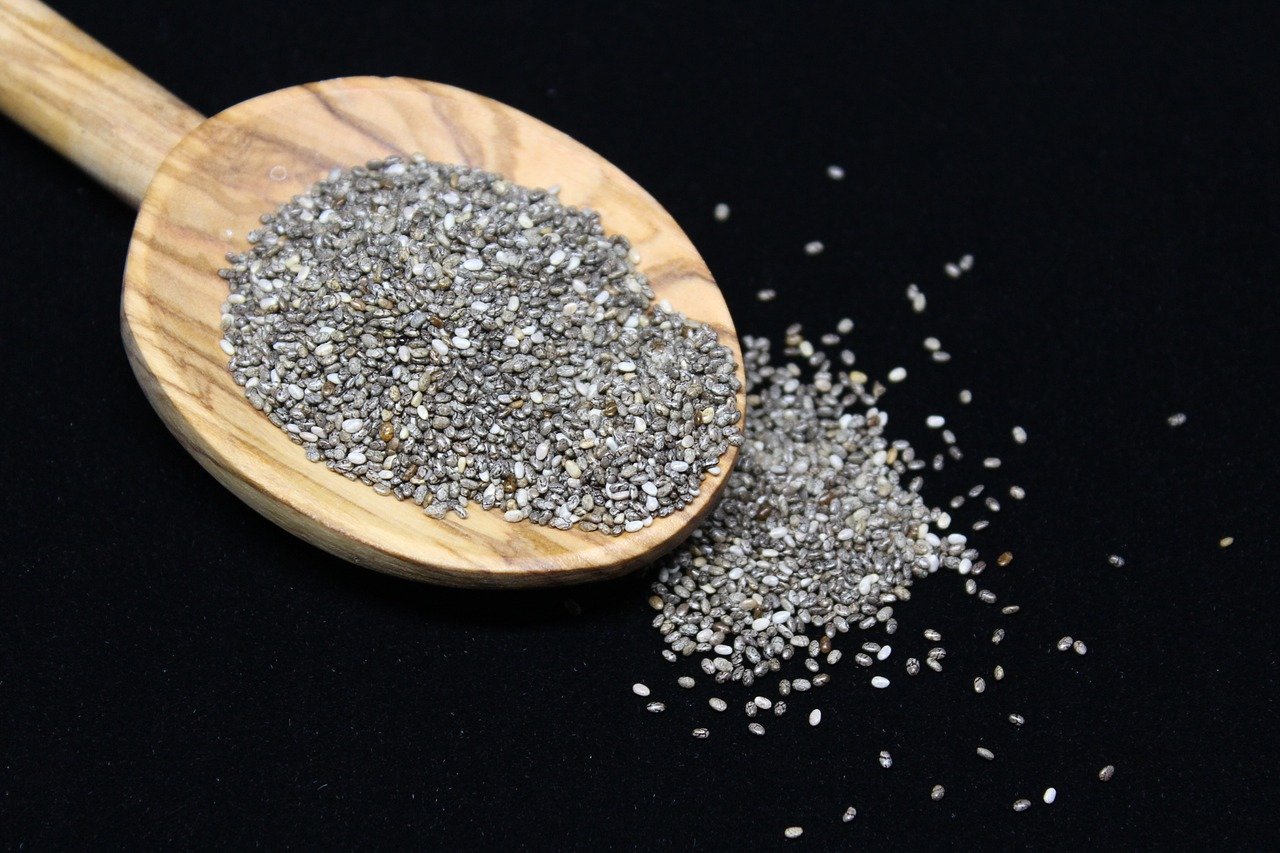
Chia seeds contain fiber, omega-3 fatty acids, protein, a number of essential minerals, plus useful antioxidants. They are said to help improve digestive health, lower blood pressure, and improve blood sugar control. We will look a little further into these claims.
If you don’t want to read the entire article – please just consider this one fact. Indigenous peoples always pre-soaked or ground their chia seeds before eating them. You should too.

Nutrition Facts of Chia Seeds
The nutrients in one ounce of chia seeds, according to the United States Department of Agriculture (USDA).
   Calories: 138
   Protein: 4.7 grams
   Carbohydrates: 11.9 grams
   Sugar: 0 grams
   Fiber: 9.8 grams
   Fat: 8.7 grams
   Saturated: 0.9 grams
   Monounsaturated: 0.7 grams
   Polyunsaturated: 6.7 grams
   Omega-3: 5 grams
   Omega-6: 1.7 grams
By weight:
   6 percent water,
   42 percent carbohydrates (of which 82 percent is fiber),
   31 percent fat
   17 percent protein
Chia Fiber

More than 80 percent of the carbohydrate content of chia seeds is in the form of fiber. USDA reports that chia seeds contain roughly 90 (85-93 percent) percent insoluble fiber and roughly 10 percent (7-15 percent) soluble fiber. This ratio of fiber types is considered by many to be an easier to digest than the fibers found in green vegetables, say broccoli. Due to this soluble fiber content, chia seeds slow down the digestive process, leading to increased fullness and decreased food intake.
One thing that Western medicine agrees on is that most people don’t consume enough fiber. High fiber intake is linked to improved gut health and a lower risk of numerous diseases. A single ounce of chia seeds provides close to 10 grams of fiber, about a third of the ideal daily value (DV) for an adult human.
Meanwhile, when it comes to getting the fiber you need for gut health, chia seeds are notably free of gluten. Often gluten can be found in a number of the fiber powders that are sold for health.
Chia fiber are of a type that can be fermented in your gut by the prefered gut bacteria. This then promotes the formation of short-chain fatty acids (SCFAs) and helps improve colon health.

Gut Bacteria and Health
It comes down to gut bacteria – you can have ones that can be detrimental, and likewise different species that help you thrive. Medical conditions such as SIBO (Small Intestine Bacterial Overgrowth), and IBS (Irritable Bowel Syndrome) can be traced directly to an overgrowth of “bad” gut bacteria. Chia is said to help nurture the “good” gut bacteria.
There was a fascinating double blind study published several years ago in England. Clinical depression was treated with traditional anti-depressants, probiotics, or placebo. This was double-blind so even the doctors had no idea who got what. The highest reported rate of less depression was found with the group that had taken probiotics for three months. I keep watching for a follow-up study, but I guess it shall not happen. Big pharma would not want further investigation on this topic!

Fats in Chia Seed
One of the unique characteristics of chia seeds is their high content of heart-healthy omega-3 fatty acids. About 60 percent of the fats in chia seeds consist of the omega-3 alpha-linolenic acid (ALA), while about 20 percent consist of omega-6 fatty acids. Chia seeds are thus the best known plant-based source of omega-3 fatty acids – even better than flax seed. Why is this of note? Because a 2019 review of a number of studies showed that ALA reduces cholesterol, triglycerides, and blood pressure, and is associated with a lower risk of cardiovascular disease and diabetes. It may also improve cognition, but more research is needed.
Side note – the ALA found in chia needs to be converted into the active forms (EPA and DHA) before your body can use it, and this process is often inefficient in humans that are lacking “good” gut bacteria.

Protein in Chia Seed
Chia seeds contain 5 grams of protein per one-ounce serving. This number is similar amount to other dicot seeds (like buckwheat). The amount of protein is more (often far more) than most cereal grains (wheat, corn, oats). Studies show that high protein intake is associated with increased fullness after meals and reduced food intake.
Not all Protein is Created Equal
Protein comes in the form of amino acids. There are 21 different ones that humans need for life. Of those 21, 9 are essential. Notably, chia seeds offer all nine of these essential amino acids. This means they are considered a high quality plant-based protein. Please note that chia seed are not recommended as the sole protein source in anyone’s diet. Protein sources should always be varied, whether you’re vegan, vegetarian, omnivore, or carnivore.

Vitamins & Minerals
One ounce of chia seeds provides significant amounts of many minerals and some vitamins, particularly the vitamins thiamine and niacin. A full list is in the chart below.
Minerals
Chia seeds, like many seeds, provide abundant minerals. This is because mama plant tucks them in there to help her babies grow. Meanwhile, seeds of agricultural crops that have been cultivated for thousands of years (like wheat, oats, corn, and rice) have been found to contain fewer minerals than the wild types that they were bred from. Our agricultural seed crops have come to depend on humans to make sure they survive.
Manganese (23 percent of the Daily Value or DV). Whole grains and seeds are rich in manganese, which is essential for metabolism, growth, and development.
Phosphorus (20 percent of the DV). Usually found in protein-rich foods, phosphorus contributes to bone health and tissue maintenance.
Copper (29 percent of the DV). A mineral often lacking in the modern diet, copper is important for heart health and brain function.
Selenium (29 percent of the DV). An important antioxidant, selenium is involved in many processes in the human body. It may be linked to prostate health.
Iron (22 percent of the DV). As a component of hemoglobin in red blood cells, iron is involved in the transport of oxygen throughout your body.
Magnesium (23 percent of the DV). Often lacking in the Western diet, magnesium plays important roles in many bodily processes.
Absorbing Nutrients
Note about mineral rich seeds. Indeed, the minerals are in the seeds, but that does not bean you will absorb the entire amount found in the seeds. Iron, for example, is hard for your body to take up when calcium is also present. My favorite way to eat chia seeds? In yogurt. Nice, calcium-rich yogurt. This means I do need to find another way to get my iron – something at least an hour away from my yogurt.

Other Plant Compounds
Chia seeds contain a number of plant compounds, including some antioxidants – ones that are considered to be beneficial by the medical community. Why would a plant put antioxidants into its seeds? Antioxidants protect the fats in the seeds from breaking down before they are needed by the growing baby plant.
Chlorogenic acid. This is an antioxidant. It is also found in coffee and a number of tropical fruits. It is also shown in some small studies to have benefits for heart health.
Caffeic acid. This substance is abundant in many plant foods. Studies show that it appears to help fight inflammation in your body.
Quercetin. A powerful antioxidant. Said to promote heart health and reduce the risk of cancer.
Kaempferol. This antioxidant has been associated with a decreased risk of cancer and other chronic diseases.

Chia and Blood Sugar
Having healthy blood sugar levels is crucial for optimal health. Animal studies demonstrate that sprouted chia seeds reduce insulin resistance and improve blood sugar control, which are important risk factors for metabolic syndrome, type 2 diabetes, and heart disease.
One human study found that bread made with PRE-SOAKED chia seeds causes a reduced blood sugar response in people without diabetes, compared with more traditional breads.
Now here is something to notice. Other studies were done and report that chia is not useful. I looked them up. They are seriously FLAWED studies! They say nothing at all about pre-soaking the seeds. The two studies are often quoted on the interweb when people want to dismiss the value of chia seeds. Pre-soak your chia seeds 24 to 48 hours – or longer.

Any Downsides?
Chia seeds are generally considered safe to eat. Few adverse effects have been reported after eating them. However, if you have not pre-soaked them, be sure to drink ample liquids when you eat them. This is to avoid possible digestive side effects. This is why we pre-soak our chia seeds in our recipes.
Recipe Links
USDA report for chia seeds – from Wikipedia
This will look different from what we wrote about. This chart is in grams while the discussion above is based on ounces.
| Nutritional value per 100 g (3.5 oz) | |
|
Energy |
486 kcal (2,030 kJ) |
|
Carbohydrates |
42.1 g |
|
Dietary fiber |
34.4 g |
|
Fat |
30.7 g |
|
Protein |
16.5 g |
|
Vitamins |
percent DV — Amount |
|
Vitamin A equiv. |
7% — 54 μg |
|
Thiamine (B1) |
54% — 0.62 mg |
|
Riboflavin (B2) |
14% — 0.17 mg |
|
Niacin (B3) |
59% — 8.83 mg |
|
Folate (B9) |
12% — 49 μg |
|
Vitamin C |
2% — 1.6 mg |
|
Vitamin E |
3% — 0.5 mg |
|
Minerals |
Percent DV — Amount |
|
Calcium |
63% — 631 mg |
|
Iron |
59% — 7.7 mg |
|
Magnesium |
94% — 335 mg |
|
Manganese |
130% — 2.72 mg |
|
Phosphorus |
123% — 860 mg |
|
Potassium |
9% — 407 mg |
|
Zinc |
48% — 4.6 mg |
More Honey Uses!
 May we suggest our dandy little cookbook? Using Honey in New and Savory Ways offers 36 pages of tips for using honey in your cooking, as well as in all manner of dishes. A steal at only $6!
We hope you will help support some local Southwest folks!
From the review:
“Honey is for more than desserts and this book can help! Using honey in cooking savory dishes helps engage all your taste buds and adds a layer of added flavor to everyday dishes – plus holiday fare.”
Beekeeper? We offer volume discounts – because if you sell honey in local markets you might want to offer some of these books as well. Use this Special Orders link.
Pay by check? Sure! (we like that option too!) Use this Special Orders link.
Legal Note
© Article copyright Savor the Southwest. All rights reserved. You must ask permission to republish an entire blog post or article. Okay to use a short excerpt but you must give proper credit. You must include a link back to the original post on our site. No stealing photos.
Disclaimer
The authors of this website have researched the edibility of the materials we discuss, however, humans vary in their ability to tolerate different foods, drinks, and herbs. Individuals consuming flowers, plants, animals or derivatives mentioned in this blog do so entirely at their own risk. The authors on this site cannot be held responsible for any adverse reactions. In case of doubt please consult your medical practitioner.


Be the first to reply