

I can’t imagine a homestead without a cat. Or two. Or more. Cats are an essential component to a happy homestead.
In honor of Happy Cat Month (September) we have a guest post about cats and homestead life by one of our loyal readers, Iya Lucida who homesteads off grid in Vermont. If you have a post you would like to share please contact us. You can comment below or reply to any of our Substack newsletters.
Cats for Rodent Control
 Okay, I can amend my first statement to this, “cats are essential to non-urban homesteads. Rodent control is a requirement – not an option.”
I have heard people boast that their home is rodent proof, and then winter comes. Their brand new McMansions may be proof against your average city mice but out in the countryside of Vermont we have many more species. Small species. Species that are used to squeezing into really tight cracks in tree bark, gnawing on things a bit, and finding a way to create a snug home for the entire winter. And then have babies and raise them. The walls of a McMansion are a piece of cake to them.
There are over 1000 species of mice in the world. In eastern North America there are many at least 40 different species of mice. The most common ones are: field mice, deer mice, meadow mice, meadow jumping mice, woodland mice, woodland jumping mice, and the white footed mice. Head westerly in North America and you can add cactus mice, California mice, western harvest mice, and cotton mice. Add to this list any urban mice that may have hitchhiked onto your land in a load of hay. And don’t get me started on chipmunks and squirrels. Or in the Southwest, the ever popular pack rat.
So yes, you will need some rodent control on the homestead. Or just about any home in the country.
Not all Cats are Mousers
Cats do like to chase things. Chasing is not the same as catching. Some are natural born catchers, but some have “soft paws.” It’s an old Vermonter term for a cat that will catch things but don’t hold on hard enough to keep the item caught.

Our long ago neighbors Mr. and Mrs. B had a small farm and ran 50 odd head of milkers. Soft paws is description of the cat that Uncle Clifford brought in from the barn as a house cat for the kids. Her soft paws were great with little Paula, age 3, but would she simply not hold on to the house mice she caught. Paula called her Kitty, so that was her name.
Kitty was suppose to be the kids cat, but after bedtime Uncle Clifford could be seen in his old rocking chair, reading his bible or the newspaper, Kitty snuggled up under his chin, purring loudly.

Cats do offer purring comfort and help make a house a home.
Kitty had Kittens
The adults did everything they could to keep Kitty from having kittens, because they didn’t want more soft pawed cats around the place. Despite their best efforts (locking Kitty in upstairs rooms and the like) she had at least one litter, and Duke the Killer was born to rule the barnyard and kill every mouse that ever crossed his path. He even famously fought off a dog fox that was trying to get into the chicken coop. We got Duke’s brother who caught the mice at our house. He used to sleep on or sometimes in my bed even though my mother objected.

Spay Kitty? The B’s didn’t even have running water inside the house until 1972, although the did have it in the barn so they could comply with the milk buyers rules. They barely had enough pennies to pay the taxes every year. Money for vet care was not an option.
Farm Cat Food
 Kitty and all her kin on the farm lived on whatever they caught (mice, insects, frogs, snakes) plus all the whole raw milk they could drink. Occasionally the milk had old stale bread in it and they would snarf that down too. If the hens were laying good, they might get a egg whisked in the milk but Mrs. B was always careful to not let cats into the hen house. She didn’t want them to steal eggs.
Those farm cats could survive on what they were eating, but it is not what modern day me would consider an ideal diet. They had, raw whole milk, raw whole mice, and any insect they could catch. This is probably better than the dry cat food on the market today where the first ingredient is often corn meal. From GMO corn.
I make and can my own cat food for my homestead cats. (Editors note: future post. We will link to it when it is up.)
Getting the cat food mixture just right, and with the complete nutrition that a cat would thrive on is a challenge. All the books and websites admonish readers that cats need taurine, but they always forget to say where to get that taurine.
Taurine for Cats and Humans
Taurine is one of the essential amino acids It helps all mammals including cats, dogs, and humans regulate their nervous system, maintain electrolyte balance, support eye health, and helps regulate blood sugar levels.

The best natural sources of taurine include (from highest to lowest per gram):
Scallops and other seafood, including shrimp and clams.

Tuna, both fresh and from a can, tuna is an excellent source of taurine.

Tilapia and catfish, because freshwater fish are high in taurine as well.

Octopus and squid, not often found wandering about on land.

Turkey, note that dark meat has the highest amounts of taurine.

Chicken, same as turkey, go for the dark meat for the highest amounts.

Beef is rich in many nutrients and amino acids, including taurine.

Seaweed, especially nori is an excellent option for humans on a plant-based diet.
Please do NOT put cats on a plant based diet. Their very short intestinal tract is built to live on meat.
Editor’s Notes:
Happy Cats on our Homestead
We have a series of happy homestead cat videos on our YouTube channel. Just in case you need some cat videos to help cheer you up. Stop by our channel anytime.
Honestly, not much new content recently. We are slowly filming and edition a new series for Fall release, but with all the pressing needs of summer, it’s going to be a bit before we post them.
Indoors Only
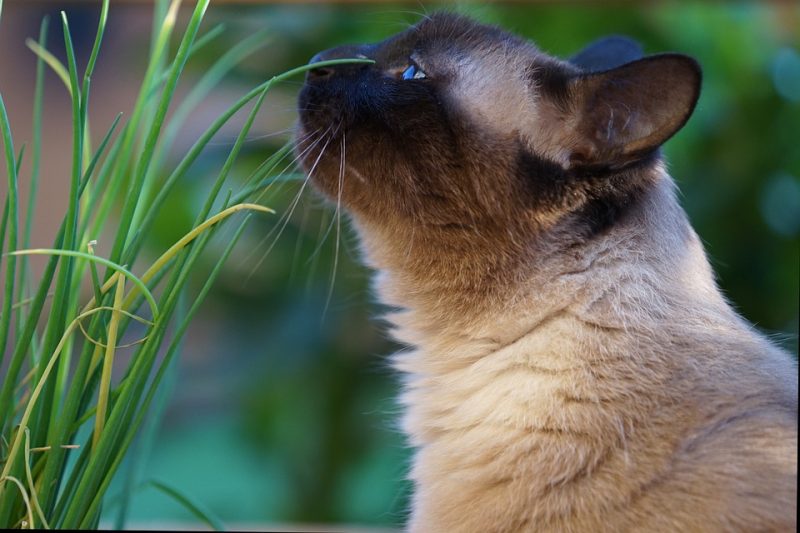
As a mostly semi-urban homesteader, my cats are indoors only. This was ideal because Kinja, the kitty ninja, loved to chase and catch, and he was mostly good at it, but he could only see clearly about 10 feet. He went out for walks on a leash but was not allowed to roam. If he had been allowed out he would have been coyote food in moments. Or he would have decided that a rattlesnake would be fun to chase. Or he would have wandered out onto the road and decided that it was a nice warm place for a nap.
Homestead cats need to be trained to be afraid of cars and snakes, and they need a safe, predator-free place to sleep, and shelter to get out of the weather.

Thanks for Reading!
Ways to Cook With Honey
 May we suggest our dandy little cookbook?
Using Honey in New and Savory Ways offers 36 pages of tips for using honey in your cooking, as well as in all manner of dishes.
We hope you will help support some local Southwest folks!
From the review:
“Honey is for more than desserts and this book can help! Using honey in cooking savory dishes helps engage all your taste buds and adds a layer of added flavor to everyday dishes – plus holiday fare.”
Beekeeper? We offer volume discounts – because if you sell honey in local markets you might want to offer some recipe book as well. To order use our Special Orders tab.
Check? Sure we take those too – just use that Special Orders tab.
Copyright
© Article copyright Jacqueline A. Soule/ Savor the Southwest. All rights reserved. You must ask permission to republish an entire blog post or article. Okay to use a short excerpt – but you must give proper credit to Savor the Southwest. You must include a link to the original post on this site. No stealing photos.
Disclaimer
The authors of this website have researched the edibility of the materials we discuss, however, humans vary in their ability to tolerate different foods, drinks, and herbs. Individuals consuming flowers, plants, animals or derivatives mentioned in this blog do so entirely at their own risk. The authors on this site cannot be held responsible for any adverse reaction. In case of doubt please consult your medical practitioner.


Be the first to reply