
Infuse vinegar. Infuse flavor. Maybe infuse health. Infuse newness into old. You can infuse so many things! Infuse some cash into your life? Sure that could happen too. Making new flavors to enjoy can reduce the urge to go out to eat (or order delivery) simply because you are bored with your old flavors and want to savor something else. You can save money when you are the one creating that “something else” to savor.

Infuse!
Infusing things are not new to you. When you make a cup of tea you are infusing the tea into the water. We have talked about infusions of herbal teas several times on this site – for hot chai tea, for iced tea, for specific teas like desert broom. We have spoken of making cordials – those are infusing something, usually fruit, into alcohol. Tinctures, like elderberry tincture, are a type of infusion.
The whole idea is that we are fusing one thing into another, thus creating something new. Today lets look specifically about infusing vinegars.

Infuse Flavor into Vinegar
 The easiest way to start this whole infusion thing is to infuse some flavorful herbs into store-bought vinegar. You can also use the apple scrap vinegar you made using our recipe.
Adding herbs mellow vinegar, just as ageing mellows wine. Any vinegar will do, but white vinegar has the advantage of being clear so one can see the herbal contents. Add a touch of cider vinegar for color if you want, or use the juice of pomegranate or prickly pear fruit for a red tint.
Start Early
Herbal infusions need about two weeks to develop flavor. Six weeks is better. Balsamic vinegar is aged six years to develop its distinctive rich flavor.
For example our honey sauces (or dressings). When we make sauces or dressings, we suggest making them ahead of time to give the herbs a chance to infuse into the sauce. You can make a salad dressing and pour it on the salad right then – but the flavors are richer if the dressing was made two weeks ago. The herbs have infused into the vinegar and oil.
Be Safe
If plants you are using to create infusions have been grown in anything other than a sterile environment, you need to be safe. In other words = always be safe!
If you are infusing vinegar, or vinegar and oil for salad dressing you can use fresh or dried herbs. If you are infusing oil alone, use only dried herbs. The acid in vinegar kills bacteria, but oils are not acidic enough to kill bacteria. Note that some species of bacteria are “good” like the ones in your gut. Some bacteria are not so good for us, especially the deadly “B” bacteria.

The Dreaded “B” Bacteria
The “B” bacteria is Clostridium botulinum (and related Clostridium species). These bacteria produce the botulinum toxin, or botulinum neurotoxin (commonly called botox). This is a neurotoxic protein that can keep nerves and muscles from working – like the nerves that tell your lungs inflate, or the nerves that tell your heart to beat. This bacteria is blowing around everywhere and can be found in soil, and thus on plants that grow in soil.
These bacterial spores are everywhere, and you no doubt have eaten thousands of Clostridium in your life time, as have you household pets and farmyard animals. The danger happens when the bacterial spores start growing. To do that they need optimal conditions. They need some moisture, a low acid environment, a low oxygen or no-oxygen place (like inside a nice oil bath), and a temperature range between 40 and 120 degrees Fahrenheit. Our bodies contain sufficient oxygen that Clostridium will not grow in us. Sadly, this is not always the case with the food we make for ourselves.
I was trained that drying herbs for infusing means that there will be no moisture in that oily bath, and thus the “B” bacteria can not grow. It is thus currently recommended that when infusing herbs into oil, you use dried herbs. I am always careful when it comes to things that might end the life of me or my loved ones, so I simply do not create infused oils.
As for canning, that is why pickles are considered a good way to store food. Why pressure canning for specific times is considered safe to rid food of living Clostridium spores. I am careful when canning low acid foods.
Start Clean
Clean is good. You don’t need to boil them because this is a high acid food, but clean – need that. Put the bottles through a hot dishwasher cycle, or at least hand wash with soap and hot water. Rinse all fresh fruits, leafy herbs, and any vegetables in a tub of water to which a slug of vinegar has been added. Soak for five minutes.
This goes equally for home-grown plants, but also stuff from the stores. Or maybe that is especially the stuff from stores. Think about the recent food recalls. I’d rather re-wash stuff than get sick.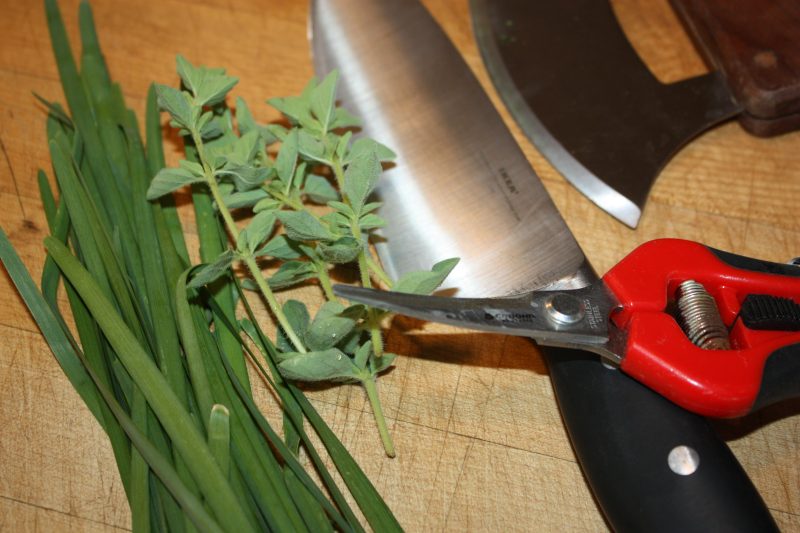
Use How Much?

Making gifts? For four cups (one quart) of vinegar, use at least one cup of fresh herbs, or half a cup of dried herbs. You can use more, but any less just doesn’t get the flavor across. More Gifts from your Kitchen in fact – 12 great ideas.
Just making a dressing for salad? Most of us don’t make quarts at a time, so you can reduce this to one cup vinegar and one quarter cup of herbs.
Be Generous
Pack the fresh herbs in. I said “at least one cup.” You should use more than that. Because after a few days in vinegar, the leaves will relax and droop to the bottom of the bottle. Fine if it’s just for you, but if you are making this for a gift, unless you have a lot in there your beautiful gift will look sparse.
Use a Pleasing Blend

Don’t simply toss things together. Sometimes it works, but often it does not. Some people like precise recipes, others prefer to “wing it.” I often wing it, and then simply swallow the mess because I am too thrifty to waste food. May I suggest that you see our post on Making Herbal Blends, and use those blends in your infusings.
Infuse Health
Disclaimer. This is for your entertainment, and not offered as medical advice.
It is about to be “Yellow Month” in much of the Southwest, with the palo verde trees blooming in the Sonoran Desert. It is a time for allergies for many people.
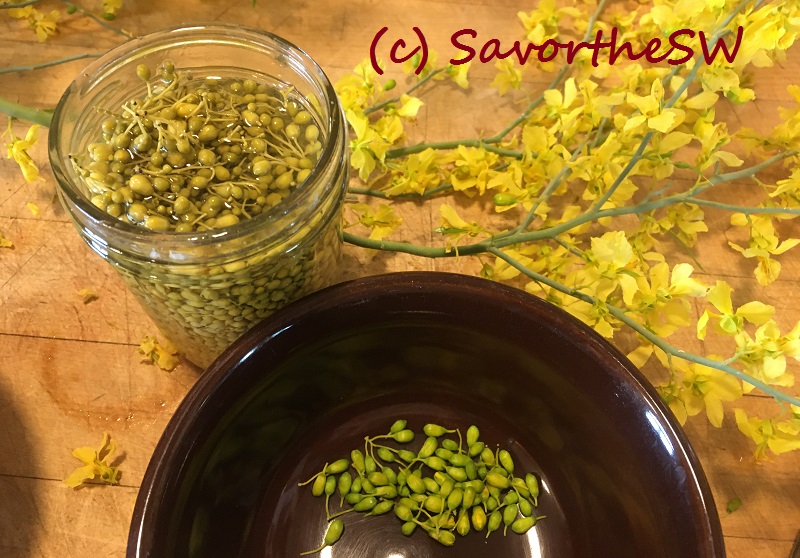
I forage as many palo verde flowers as I can and stuff a jar with them. I then top this with apple cider vinegar, cap tightly, and set it in a dark cupboard to infuse until the following year. About one month before “Yellow Month” I get this vinegar out and start using it for everything. Seasonal allergies are thus greatly reduced for me.
Placebo effect? Maybe yes, but that doesn’t explain why my spouse – who had no idea I was doing this – remarked that his allergies were less severe last year. Are we dosing again this year? You bet. Tablespoon of apple cider vinegar and a tablespoon of maple syrup in a glass of water – a refreshing way to hydrate! This blend is called “switchel,” in Vermont at least, and has been enjoyed for centuries. There are a number of variations.
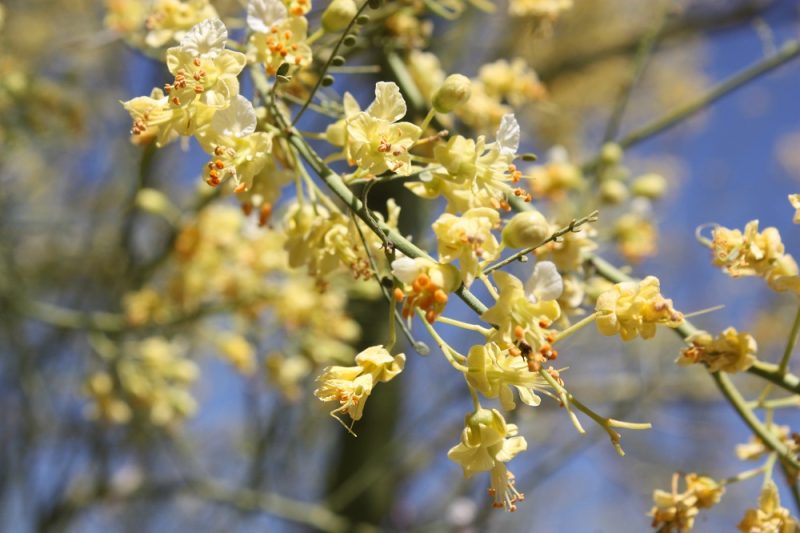
You can also use palo verde flowers to make:
     palo verde flower soup, or
     “capers” or pickled flower buds (on our YouTube), or
     sparkling floral beverage.
Use Your Infusion
For best flavor, use your infused herbal vinegar within a year to 18 months. Also – this is your reminder to store all herbs and herbal products out of direct sunlight.
As always, enjoy!
More on 50 different herbs
 The last few copies of this out-of-print award winning Southwestern book are now for sale. Father Kino’s Herbs: Growing and Using Them Today The review says:
“Award-winning garden writer Dr. Jacqueline A. Soule has pulled together a fascinating book on the life of Father Eusebio Francisco Kino and some of the plants that he brought to Southern Arizona and northwestern Sonora, and area called the Pimeria Alta.”
This link is to our sales site. The profits from the sale go to the local Horticulture Therapy non-profit Tierra del Sol Institute. We hope you will help support this great Southwest non-profit!
Legal Notes
© Article copyright Savor the Southwest // Jacqueline A. Soule. All rights reserved. You must ask permission to republish an entire blog post or article. Okay to use a short excerpt but you must give proper credit. You must include a link back to the original post on our site. No stealing photos.
Disclaimer
The authors of this website have researched the uses and edibility of the materials we discuss, however, humans vary in their ability to tolerate different foods, drinks, and herbs. Individuals consuming flowers, plants, animals or derivatives mentioned in this blog do so entirely at their own risk. The authors on this site cannot be held responsible for any adverse reaction. In case of doubt please consult your medical practitioner.

Be the first to reply