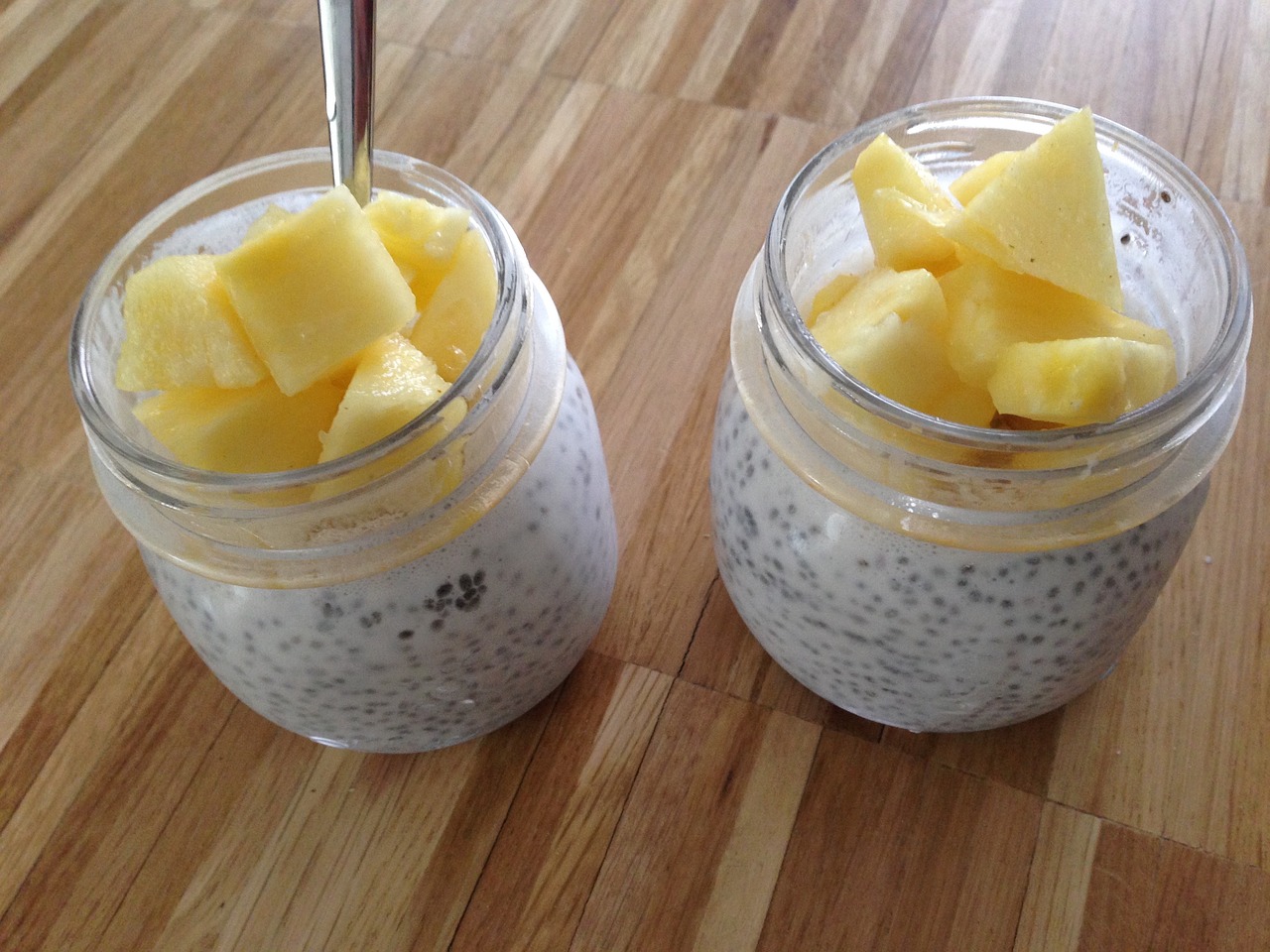
Happy Honey Month from Monica the beekeeper. I am here to share a wonderfully light pudding that uses a touch of honey and could be part of a paleo diet if you are so inclined.
Chia
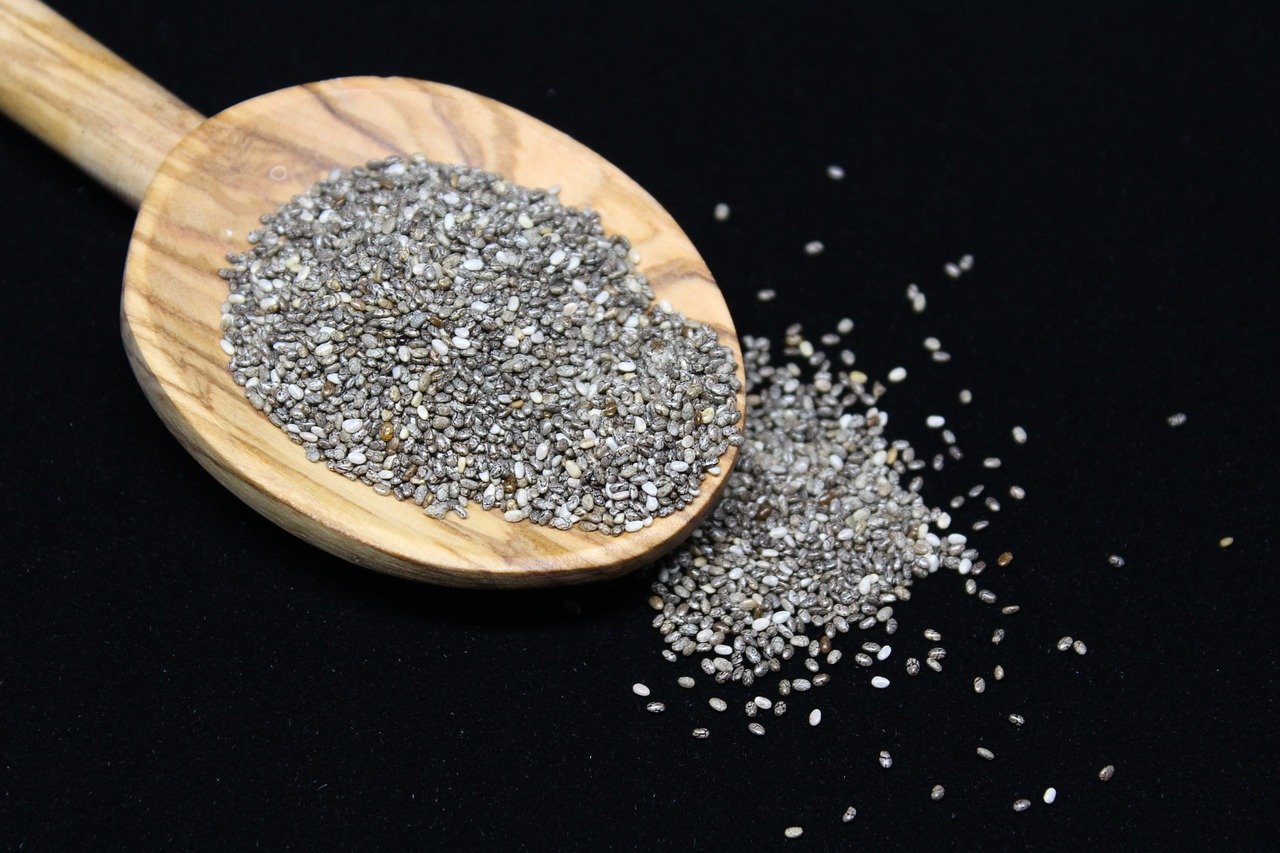
The key ingredient to this pudding are the chia seeds. Chia seeds are hydrophilic. Hydrophilic means that they love water. They love it so much that they can absorb over ten times their weight.
 Word Nerd on Hydrophilic
The word hydrophilic comes to us from two ancient Greek words.
Hydros meaning water. You know about staying hydrated in the desert, and avoiding dehydration. Then there are hydroelectric dams, like the Hoover Dam on the Colorado River that created Lake Mead, and generates electricity to shine the sparkling lights of “Sin City.”
Philos means loving or having an affinity for. Perhaps you recall that Philadelphia was so named because it’s founder, William Penn, visualized a “city of brotherly love.”
Back to Chia
Chia, when soaked in water or other liquid will absorb the liquid and develop a mucilaginous coating. This coating gives them a gelatin type texture. If you have never had them, do try some. It’s fun to suck on a few of the seeds as you work in the garden.
Chia has Southwestern Roots
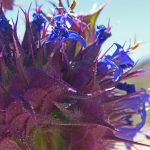
The seeds sold as “chia” come from one of three species of Salvia or wild sage (not garden sage). Salvia are in the very large and varied mint family of plants. Here in the Southwest, they come from Salvia columbariae. There is archaeological evidence that suggests that this same species of chia was once the third most important crop during pre-Columbian times for many Mesoamerican cultures including the Aztecs. Chia was cultivated along side maize, beans, and amaranth as a main staple.
Jacqueline shares this story: “When I was a child visiting the Tohono O’odham reservation, I was given some chia seeds to try. I was told that in the very old days the O’odham would suck on chia seeds as they moved their families between their summer homes and their winter homes. The kids I was playing with (or as Ethnobotanists say “my informant”) said that sucking on chia seeds was supposed to help them stay hydrated as they crossed the desert. I have a sneaking suspicion that the seeds were more used to keep the kids from chattering.”
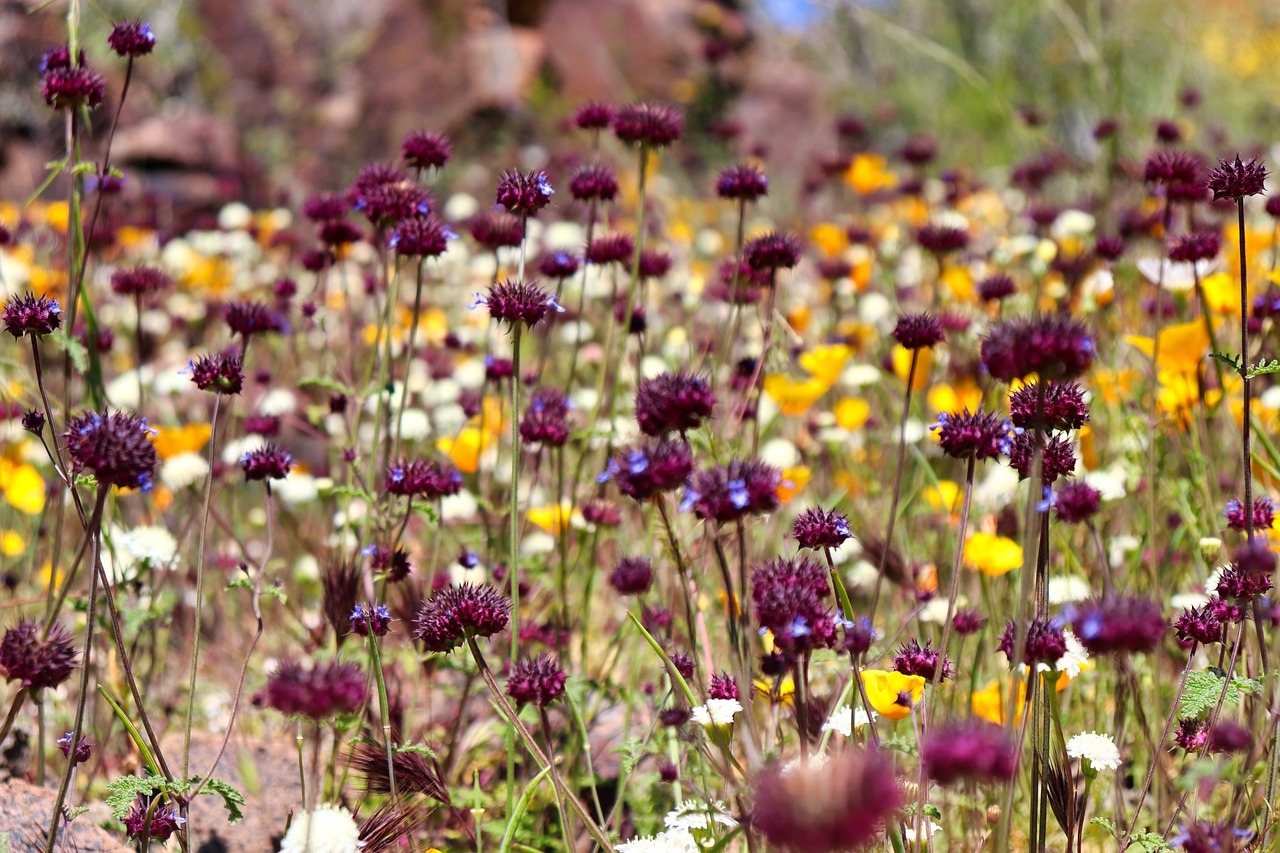
Wonderful Wildflower for Foraging
Just outside Monica and Dan King’s desert homestead and main apiary is an underground gas pipeline that was reseeded with a seed mixture that included Salvia columbariae, desert chia. Both the bees and I (Monica) enjoyed the beautiful purple-blue flowers. Now I grow them every year in my wildflower gardens.
September is a great time to start your own patch of chia. Perhaps even “guerrilla garden” some in a vacant lot or alley near your home. How to grow wildflowers on Gardening With Soule.

Harvest Chia
Since the desert chia produces dense clusters of flowers, it is easy to harvest clusters of seed. Simply wait until the blooms are done and the stalk begins to dry. Place a bowl or basket below the stalk and snap it off into the container Let everything dry a few more days (out of direct sunlight). Shake the seed out of the pods. A kitchen colander lets the seeds slide through but holds most of the chaff.
Use Chia Seeds
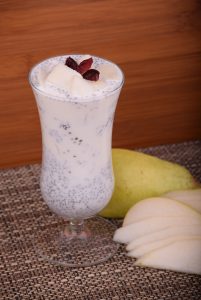 Chia is a lovely wildflower but also a healthy snack. Besides being packed full of vitamins and minerals, for every 3.5 grams of these tiny seeds there is a whopping 16.5 grams of protein and 34.4 grams of fiber! So no guilty feelings after a serving!
In this recipe the sweetness comes from coconut milk and ambrosial liquid gold – also known as honey!
Chia Honey Banana Pudding
This recipe is easy to make and you can do almost anything to jazz it up. Use different in-season fruits to top it or blend in. During off-season use preserves from your pantry. I am even thinking of some fresh chopped prickly pear fruit. Perhaps some strawberries? Chopped nuts? I use this as a base and put fun spins on it. Regardless of variations it is quite wonderful on its own.
Makes 4 servings.
2 cups coconut milk
2 medium ripe bananas
2 teaspoons local honey
1 teaspoon vanilla extract
1/2 teaspoon ground cinnamon
6 teaspoons chia seeds
In a blender, combine the coconut milk, bananas, honey, vanilla, and cinnamon. Blend until smooth and pour into a large bowl.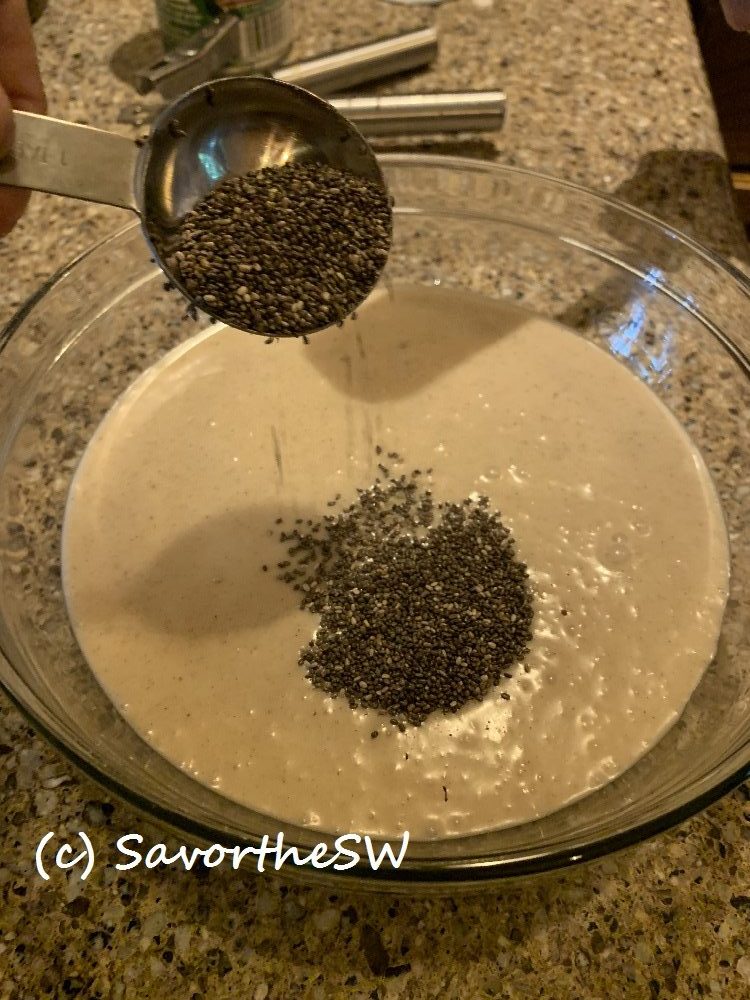
Add the chia seeds, stirring to combine.
Cover and refrigerate, stirring every 10 minutes for the first 40 minutes. This helps move the chia seeds throughout the mixture and release their “gelatin.”
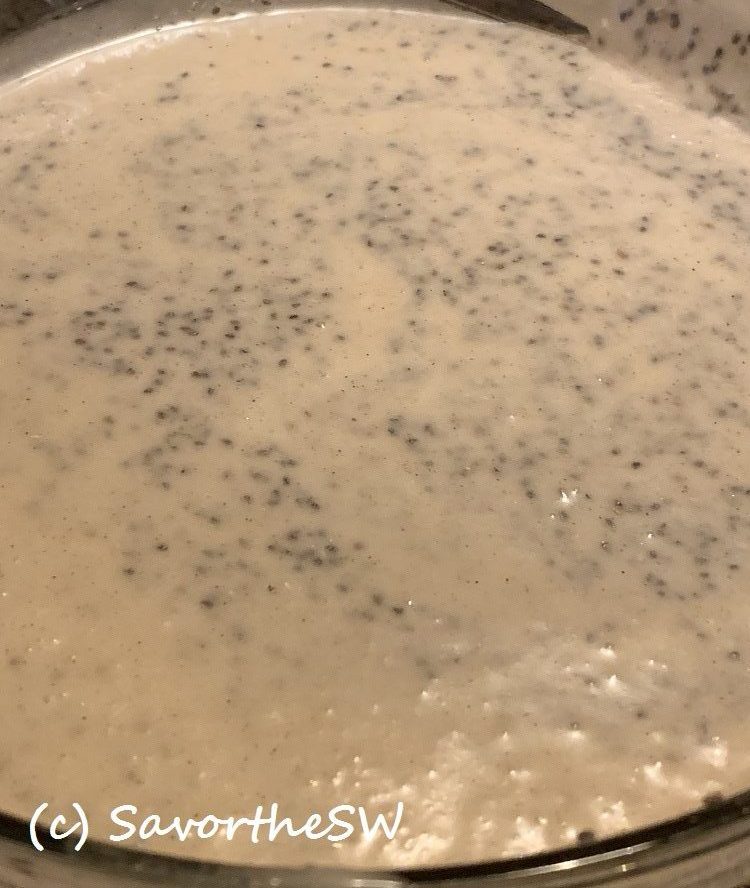
Ideally allow to chill for another 3-7 hours before serving, but can be served at this stage.
Serve. Spoon pudding into serving glasses and add any desired toppings such as chopped fruit, nuts, coconut flakes, etc. When using preserves, it works better to put a couple tablespoons in the bottom of the serving glass then top with the pudding.
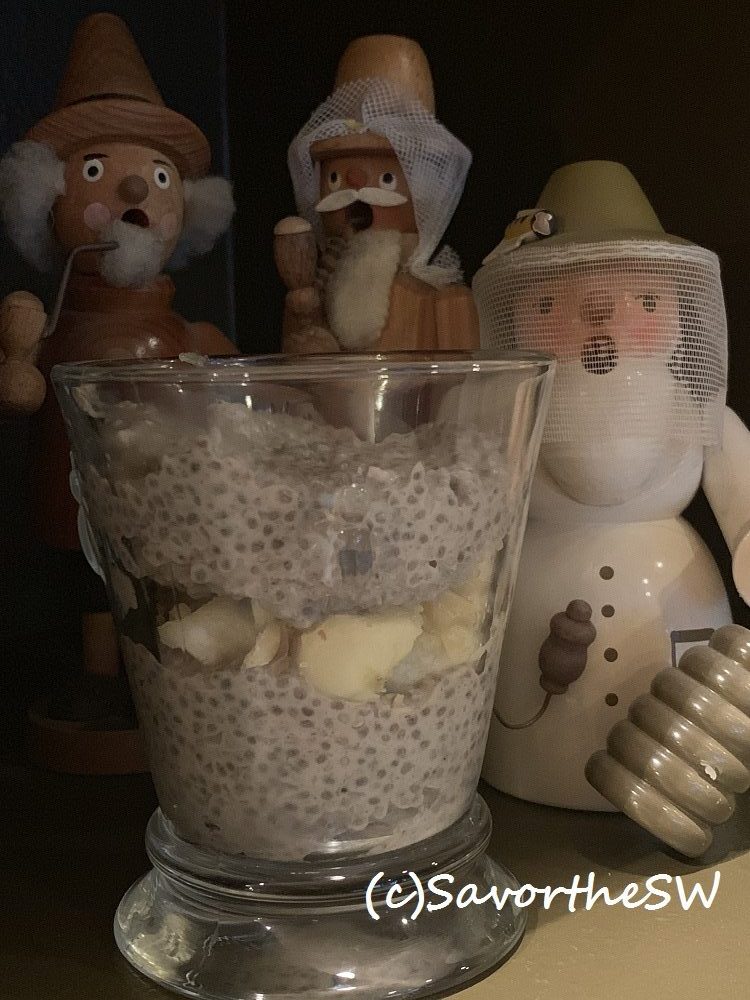
Creators Note. Because of the action of the chia seeds, you do need to make it in one dish and then divide into serving glasses. You can’t pour it from the blender into serving dishes.
Uncle Smokey adds this note. “It is unwise to eat the entire bowl of this delicious pudding at one sitting. No matter if it was a long two hour sitting while working a highly difficult crossword.”
More Honey Uses!
 May we suggest our dandy little cookbook? Using Honey in New and Savory Ways offers 36 pages of tips for using honey in your cooking, as well as in all manner of dishes. A steal at only $6!
We hope you will help support some local Southwest folks!
From the review:
“Honey is for more than desserts and this book can help! Using honey in cooking savory dishes helps engage all your taste buds and adds a layer of added flavor to everyday dishes – plus holiday fare.”
Beekeeper? We offer volume discounts – because if you sell honey in local markets you might want to offer some of these books as well.
Legal Note
© Article copyright Savor the Southwest. All rights reserved. You must ask permission to republish an entire blog post or article. Okay to use a short excerpt but you must give proper credit. You must include a link back to the original post on our site. No stealing photos.
Disclaimer
The authors of this website have researched the edibility of the materials we discuss, however, humans vary in their ability to tolerate different foods, drinks, and herbs. Individuals consuming flowers, plants, animals or derivatives mentioned in this blog do so entirely at their own risk. The authors on this site cannot be held responsible for any adverse reaction. In case of doubt please consult your medical practitioner.
Full USDA report for chia seeds From Wikipedia.
| Nutritional value per 100 g (3.5 oz) | |
|
Energy |
486 kcal (2,030 kJ) |
|
Carbohydrates |
42.1 g |
|
Dietary fiber |
34.4 g |
|
Fat |
30.7 g |
|
Protein |
16.5 g |
|
Vitamins |
Quantity %DV† |
|
Vitamin A equiv. |
7%
54 μg |
|
Thiamine (B1) |
54%
0.62 mg |
|
Riboflavin (B2) |
14%
0.17 mg |
|
Niacin (B3) |
59%
8.83 mg |
|
Folate (B9) |
12%
49 μg |
|
Vitamin C |
2%
1.6 mg |
|
Vitamin E |
3%
0.5 mg |
|
Minerals |
Quantity %DV† |
|
Calcium |
63%
631 mg |
|
Iron |
59%
7.7 mg |
|
Magnesium |
94%
335 mg |
|
Manganese |
130%
2.72 mg |
|
Phosphorus |
123%
860 mg |
|
Potassium |
9%
407 mg |
|
Zinc |
48%
4.6 mg |
| Other constituents | Quantity |
| Water | 5.8 g |


Be the first to reply