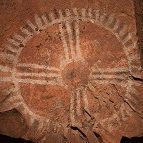

Some of our Southwest native plants, like Ephedra, are found around the world. Everywhere that Ephedra occurs, Native peoples have found similar uses for it, generally as a tea.
Prehistoric Ephedra
Ephedra is a fascinating plant that has been on earth since before plants had figured out how to make truly vascular leaves, not to mention flowers. They hadn’t even really figured out pollen yet! As a botanist, I admire the plant for many such technical reasons, and I won’t bore you with the many fascinating details.

Ephedra Species
The botanists and gene jockeys have decided that there are 77 species of Ephedra. The various species are widespread in the arid regions of the world, ranging across the Southwest, down into Mexico, and cropping up again in western South America. Meanwhile China, southwest and central Asia has a clump of species, as does southern Europe, and northern Africa.
Everywhere that ephedra is found humans have used it. Indeed, human use of the herb dates back at least 5000 years. Like so many long used herbs, the common name and scientific name are the same, ephedra and Ephedra. (Think Iris and iris.)
In the Southwest, ephedra is also commonly called Mormon tea or joint fir. The common names don’t recognize the different species found across the Southwest. Note that the Chinese name for is ma huang.

Using Ephedra
Ephedra has long been used as a herbal tea, a morning “pick me up” by Mormons and gentiles alike who wish to avoid caffeine. The compound ependrine is a proven stimulant. Excessive use of ephedra can be a problem however, especially when extracted from the plant and condensed into pill form. That can be said about many herbal remedies. All things in moderation is a good idea when using any plant product. (Read to the end for why moderation is key with ephedra.) Even too much spinach or broccoli can have consequences, but that is a story for another day.
Finely ground ephedra twigs have been used in exfoliating skin wash blends, used to help remove dead skin cells. The plant is relatively high in silica, a compound used to make glass.
The seeds of Ephedra nevedensis have historically been harvested, toasted and ground into meal. This was then included with corn meal in tortillias, and included in stews and soups.

As a Tea
Ephedra makes a nice morning beverage, especially if you wish to avoid coffee or the pekoe teas because of the unsustainable way these products are grown, harvested, and shipped. Simply make an infusion just like you do with “tea.” Place one heaping teaspoon of finely broken dried ephedra branches per cup and pour boiling water over them. Allow to infuse for three to five minutes then enjoy. A dollop of honey is nice, or better yet use some desert lavender infused honey – so tasty!
I find that one teaspoon of dried ephedra is enough for a brew similar to green tea in intensity of flavor. Too much can be bitter.

Harvest Ephedra
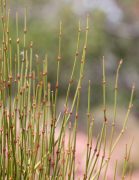
Ephedra is easy to dry for later use, and makes a more palatable, less bitter, brew than fresh material. Ideally, harvest and dry ephedra in early spring (February and March) before it begins it’s “bloom” cycle. This is when it is most potent.
Yes, they are fairly dry – but you will need to dry your twiggy harvest further before storing. Snip the branches into half inch lengths. Dry on a screen or in a terra cotta saucer for 3 to 5 days. Here is our YouTube video on drying herbs.
As with most herbs, store out of direct sunlight and use dried material within one year.
More about using herbs safely as medicine.
More on Ephedra and other Native Herbs
 The last few copies of this out-of-print award winning Southwestern book are now for sale. Father Kino’s Herbs: Growing and Using Them Today The review says:
“Award-winning garden writer Dr. Jacqueline A. Soule has pulled together a fascinating book on the life of Father Eusebio Francisco Kino and some of the plants that he brought to Southern Arizona and northwestern Sonora, and area called the Pimeria Alta.”
This link is to our sales site. The profits from the sale go to the local Horticulture Therapy non-profit Tierra del Sol Institute. We hope you will help support this great Southwest non-profit!
Ephedra Misuse
As with all herbs. Moderation and care is key. Here is why ephedra is no longer found as a bulk herb.
The following is excerpted and fully cited in “Father Kino’s Herbs: Growing & Using them Today.” Many references on this one.
“Steve Bechler, a pitcher for the Baltimore Orioles, died of complications from heatstroke following a spring training workout on 17 February 2003. The medical examiner found that ephedra toxicity played a “significant role” in Bechler’s sudden death.
Following Bechler’s death, the FDA re-opened its efforts to regulate ephedra use. Bruce Silverglade, legal director for the Center for Science in the Public Interest said, “All of a sudden [after Bechler’s death] Congress dropped objections to an ephedra ban and started demanding the FDA act.” Senator Orrin Hatch, who in 1999 had helped block the FDA’s attempts to regulate ephedra, said in March 2003 that, “It has been obvious to even the most casual observer that problems exist,” and called FDA regulation of ephedra “long overdue.” Given Hatch’s prior defense of ephedra, Time magazine described his statement as “a dazzling display of hypocrisy.” (Polititians!)

FDA Response
In response to renewed calls for the regulation of ephedra, the FDA commissioned a large scale analysis of ephedra’s safety and efficacy. The study found that ephedra promoted modest short-term weight loss, but there was no evidence that it was effective for long-term weight loss or performance enhancement.
Almost simultaneously, a study in Annals of Internal Medicine reported that ephedra was 100 to 700 times more likely to cause a significant adverse reaction than other commonly used herbal supplements such as kava-kava or Ginkgo biloba (neither of which affect the heart).
On December 30, 2003, the FDA issued a press release recommending that consumers stop buying and using ephedra, and indicating its intention to ban the sale of ephedra-containing supplements. Subsequently, on 12 April 2004, the FDA issued a final rule banning the sale of ephedra-containing dietary supplements.”
Thanks for reading,
The Savorists
Cover image, ephedra in Valley of Fire, Nevada. Image courtesy J. Pawek
Other versions of this article may be still out on the interweb. I wrote it up once for a now defunct newspaper. Also there is a version excerpted from my Father Kino’s Herbs book that I wrote for the Savor Sisters in 2016. Further history of Savor the Southwest and one reason why we call the writers on this site Savorists.
Legal Notes
© Article copyright Savor the Southwest // Jacqueline A. Soule. All rights reserved. You must ask permission to republish an entire blog post or article. Okay to use a short excerpt but you must give proper credit. You must include a link back to the original post on our site. No stealing photos.
Disclaimer
The authors of this website have researched the uses and edibility of the materials we discuss, however, humans vary in their ability to tolerate different foods, drinks, and herbs. Individuals consuming flowers, plants, animals or derivatives mentioned in this blog do so entirely at their own risk. The authors on this site cannot be held responsible for any adverse reaction. In case of doubt please consult your medical practitioner.

Be the first to reply