

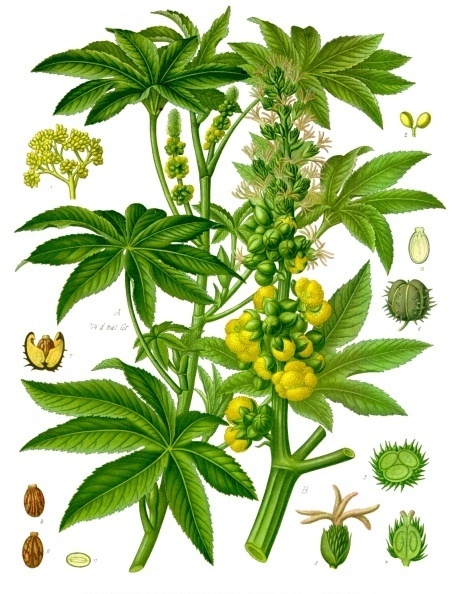
Castor bean plant (Ricinus communis) is the source of castor oil. It is called ricino or higuerilla in Spanish, and called yech! by small children dosed with it’s oil as a laxative.
It’s not a Bean
Castor is a member of the Euphorbiaceae, the spurge or poinsettia family, which is widely considered a plant family to avoid consuming, so who first figured the oil was a good laxative and spring tonic?! Not only that but it was popular 3000 years ago for body lotion, hair dressing, and for lamp oil.
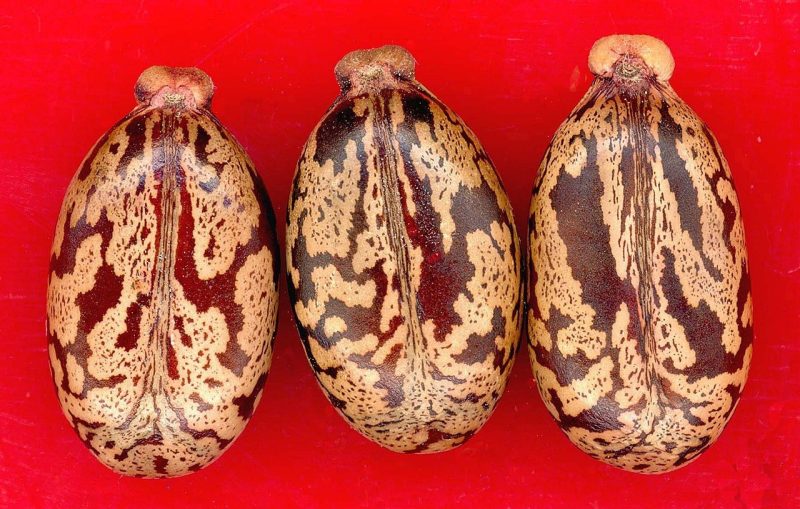
Yes, some highly effective medicines, insecticides, and uses of the oil come from the castor seeds (they are not botanically beans). Note that it is not a plant to grow and harvest for home remedies. All parts of the plant contain both useful and highly toxic compounds.
It is a Toxic Plant
Castor beans are toxic due to ricin, a chemical present in the flesh of the seeds, but not present in the oil. Although the lethal dose in adults is considered to be four to eight seeds, reports of human poisoning are rare as the seed coat is quite durable and can pass intact through the human digestive system – in theory. Poisoning occurs when animals ingest broken seeds or break the seed by chewing.

It’s also a Kino Herb
I mention castor because it was used in the Southwest starting in Father Kino’s time, indeed was planted in his mission gardens. And why not – it is a lovely ornamental plant. Better yet, the hungry wildlife leave it alone. I like to grow castor in my modern day garden as a link to such ancestral gardens.
Planting and Care
Castor plants are striking in the garden. Growing Colorful Castor Plants covered in great detail in my article on the Gardening With Soule website. Since it is strongly and highly recommended to not not not NOT attempt processing castor oil at home, I urge you to grow this only because it is a pretty plant. The powder of dust from the seeds can “unalive” you.
Handy in the Home Medicine Chest
That said, I do have castor oil from the store as part of my home remedies. It sits in the medicine chest on the shelf next to the oil of oregano, activated charcoal, vitamin E oil, and bentonite clay.

How to Use Castor Oil
I have to be careful in how I state this following information because I am not a medical doctor. I am PhD who studied medicinal plant chemistry for a number of years. Note that I could still face heavy fines if someone takes offense to what I share here today.
Laxative
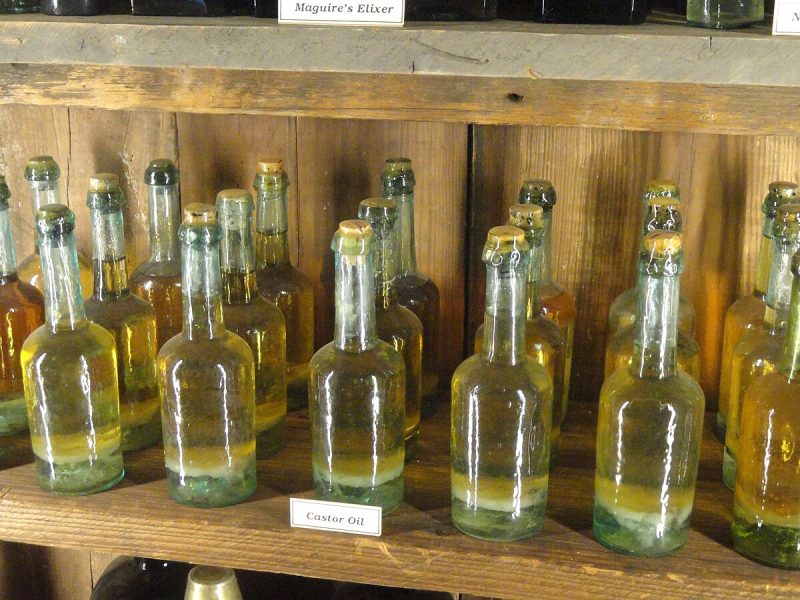
Currently the FDA only approves castor oil for use as a temporary laxative. The FDA has declared that the active ingredient in castor oil is a fatty acid called ricinoleic acid. Used as a laxative, that is indeed true. The ricinoleic acid attaches to a receptor in your intestines and causes the muscles to contract, helping move the solids through your colon.
But There’s More
But castor oil is a complex oil. It is not just one chemical. We do know that it has a measurable amount of vitamin E, omega-9 fatty acids, and omega-6 fatty acids. What other molecules and co-factors might be in the oil has not been investigated.
So let’s look at some of the other things that castor oil has historically been used for.
Good for Making Soap
It makes an awesome soap from scratch. Although it has it is a liquid oil, it saponifies more like shea butter. This was my personal, at home, experiment because I ran out of jojoba oil after I had already begun making scratch soap that day. The resulting soap was wonderful, very creamy, and less drying to my skin than my usual batches.

Anti-inflammatory
Research in animals shows that ricinoleic acid may help fight swelling and pain caused by inflammation when applied topically. One study on humans found it was as effective at treating symptoms of knee arthritis as over-the-counter nonsteroidal anti-inflammatory drugs (NSAIDs). Again, this may be action of the rubbing of a vitamin rich oil on the afflicted area, or it may indeed help heal tissues.
Heal Wounds
Castor oil is said to have antibacterial and antimicrobial properties that may help speed wound healing, especially when it’s combined with other ingredients. The FDA quickly tells you to only do this if under a doctors care.
Before you go using any new substance on your body – test it on a small patch of healthy, un-injured skin.

Skin Health
Castor oil is rich in fatty acids, and has demonstrated has moisturizing effects. You can find it in many commercial beauty products. Cleopatra used it all the time. She also had a favorite honey and date candy that Savorist Monica King shared – called Dulsis Coccora.
What is nice about the oil, is that you can also use it in its natural form, nicely free of perfumes and dyes. Again test first! It can be irritating to some people’s skin.
I have used castor oil in lotion making, but because I often gift my lotions, I prefer to use vitamin E oil to help soothe and heal skin tissues. Here’s my on-line lotion making class.
Some people claim that castor oil’s antibacterial, anti-inflammatory, and moisturizing effects help fight acne. There’s currently no research evidence to point to on this use.
Hair
Castor oil was used in ancient Egypt as an oil to add a glossy shine to hair. Over 2000 years later castor oil is sometimes marketed as a treatment for dry scalp, to hair growth, and to treat dandruff.
Castor oil would moisturize your scalp and hair. Olive oil would too. While some people claim brushing castor oil into their hair every day helped their hair growth, the scofflaws point to the fact that hair brushing alone stimulates the hair follicles and will increase blood flow, which would result in better hair growth.
Bug Bites
I mix some castor oil with bentonite clay and dab it on bug bites that I have scratched open. In my opinion it seems to help relieve itching, reduce swelling, and heal the wound. This is a subjective experience, but it seems to work better for me than calamine lotion.
Induce Labor
The oil has been used at least since 400 BCE in Greece to help during labor and delivery. It is even used today by a number of US midwives. While some studies have shown it might help, others have not found it to be effective. If nothing else, the gentle rubbing of a vitamin E rich oil on the belly of a woman in labor should be soothing.

You Decide
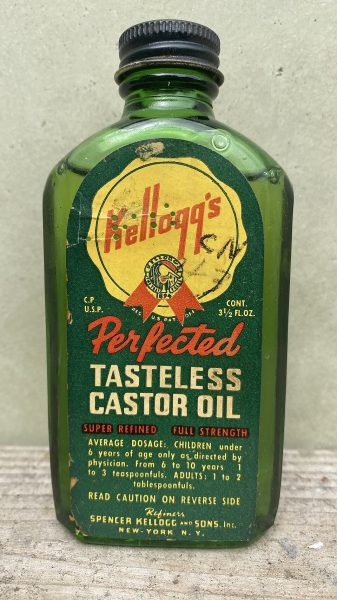
Castor oil can be purchased in the laxative section of most supermarkets. A 4 ounce bottle is around 4 dollars. This little bottle may be a handy thing to have around the homestead.
Bit of Advice – test your body to see how it reacts first – before the crunch time (what ever that may be)! If it gives you a rash, get rid of it. Since it is a plant oil – you could simply dump it into the compost and not be out a ton of money. Or you can use it as a lamp oil – as was done in the old days.
Father Kino’s Herbs
 The last few copies of this out-of-print award winning Southwestern book are now for sale. Father Kino’s Herbs: Growing and Using Them Today The review says:
“Award-winning garden writer Dr. Jacqueline A. Soule has pulled together a fascinating book on the life of Father Eusebio Francisco Kino and some of the plants that he brought to Southern Arizona and northwestern Sonora, and area called the Pimeria Alta.”
This link is to our book sales site. The profits from the sale go to the local Horticulture Therapy non-profit Tierra del Sol Institute. We hope you will help support this great Southwest non-profit!
You can learn more at the Kino Heritage Society. (.org)
Legal Notes
© Article copyright Savor the Southwest // Jacqueline A. Soule. All rights reserved. You must ask permission to republish an entire blog post or article. Okay to use a short excerpt but you must give proper credit. You must include a link back to the original post on our site. No stealing photos.
Disclaimer
The authors of this website have researched the edibility of the materials we discuss, however, humans vary in their ability to tolerate different foods, drinks, and herbs. Individuals consuming flowers, plants, animals or derivatives mentioned in this blog do so entirely at their own risk. The authors on this site cannot be held responsible for any adverse reaction. In case of doubt please consult your medical practitioner.



Be the first to reply