There are many things called wild spinach that are good to forage. In modern times, many of them are generally considered “weeds.” But a few short years ago – before modern supermarkets became the norm – most of these wild greens were simply called “food.”
Which Wild Spinach?
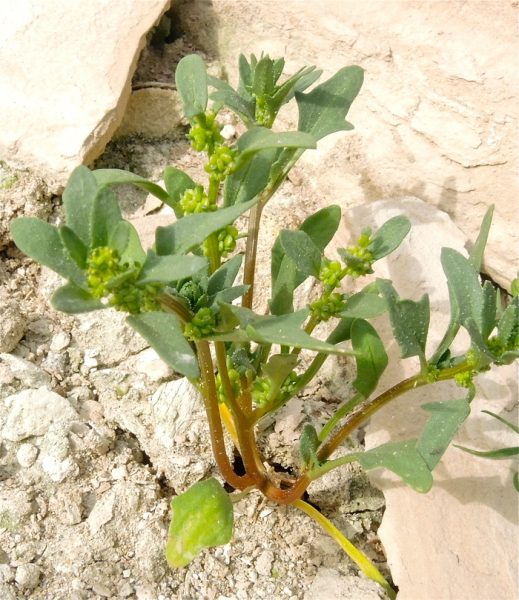
The “wild spinach,” we will look at today is also called Indian spinach, poverty weed, patota in Spanish, and opon in O’odham. To botanists it is called Monolepis nuttalliana, (also called Blitum nuttallianum). It is in the same plant family as amaranth, and is a close relative to the spinach sold in stores. Amaranth is a summer grower, but this green prefers cooler weather.
Where to Find
Like the cheeseweed we wrote about foraging a while ago, this delightful wild vegetable is a winter grower in much of our region. It is easily recognized, and fairly easily foraged.
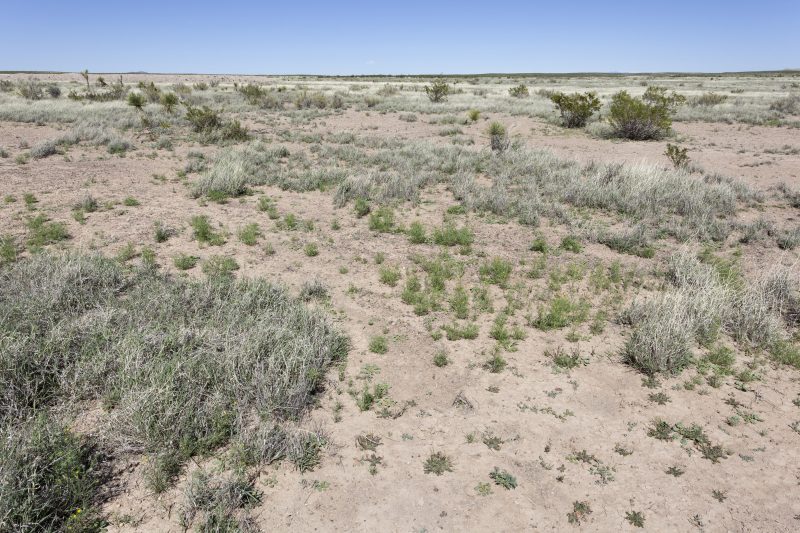
Think of it as wild and weedy. It can be found in many types of habitat, including disturbed areas. Here in the Southwest, it favors places that stay wetter than the surrounding desert after a rain, or in farmers fields, or around cattle tanks.
I first learned of this plant here in southern Arizona. Later I was delighted to find it is common across North America, clear up into Alaska, and east into New England as well. In Vermont it grows in cornfields, and I was told to help myself. The farmer thought I was crazy to harvest “weeds,” but I was delighted to have a bumper crop of free spinach.
How to Identify
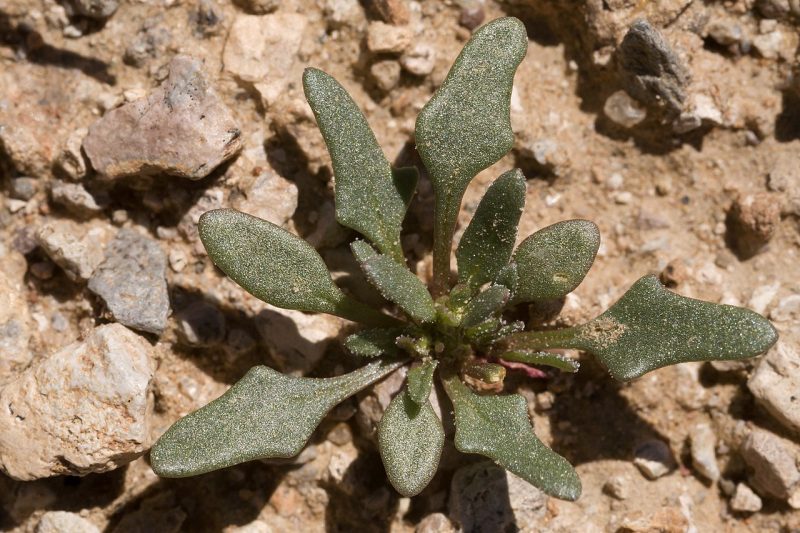
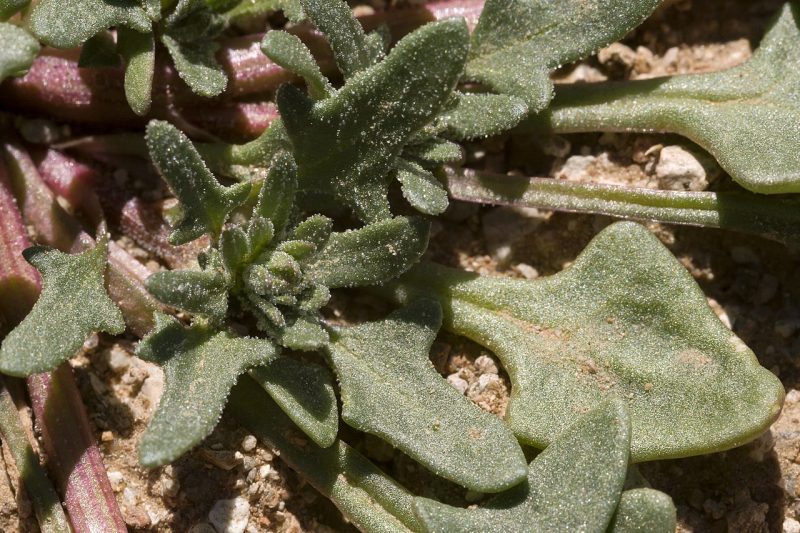
Opon translates from the O’odham as “lacy” and that is one key to identifying it.
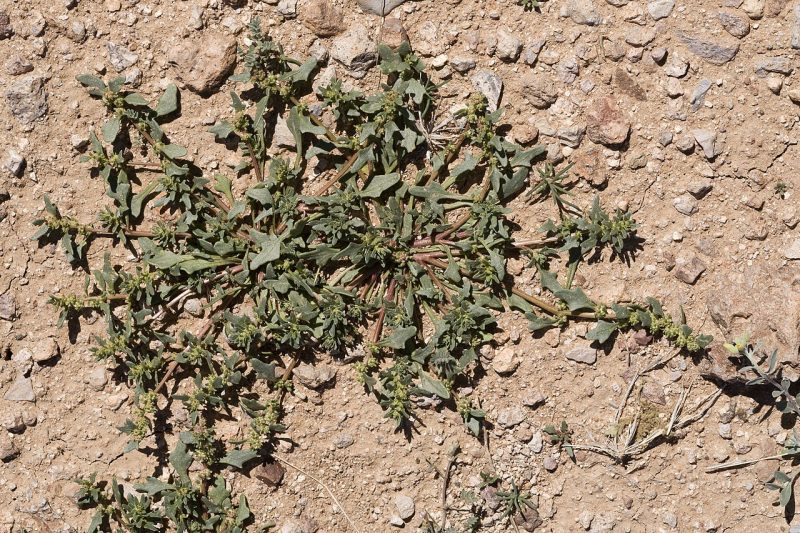
In the Southwest, the plants grow low and close to the ground, spreading out in a circle. The leaves are small, somewhat fleshy, and arrowhead shaped. Altogether the plant looks somewhat like a green doily. An edible green doily! Sometimes the plants hide under other plants, including under cheeseweed! (Meanhile, back East the plants seek the sky a tad more and are often up to a foot tall.)
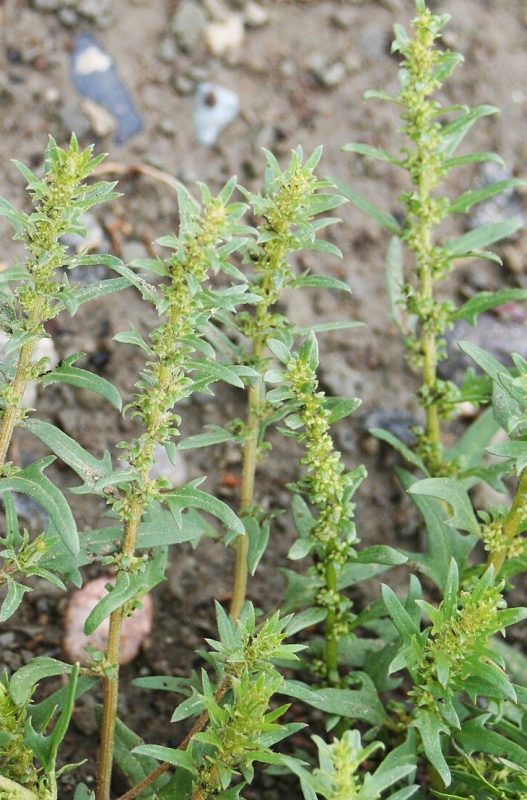
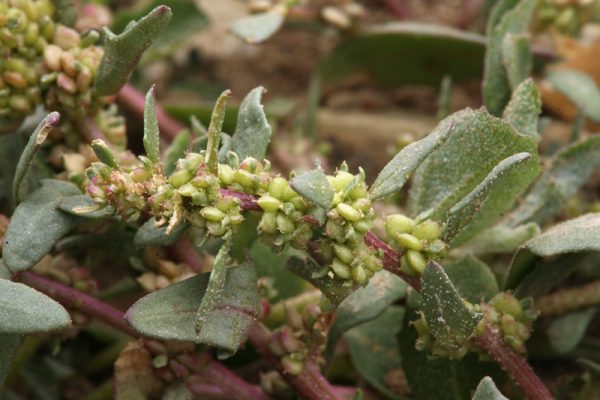
Each stem of opon will form many dense clusters of greenish flowers in the axils of the leaves (the corners where the leaves meet the stems). Over time dense clusters of green, then red seeds develop.
When to Forage Wild Spinach
Monolepis is a winter crop in the Low and Middle Desert of the Southwest, appearing sometimes as early as December, and good to forage in January and February, seeds in March. It is found in later months in Upper Elevations, generally starting in April, and may be foraged right through the summer months in cooler regions.
How to Prepare
Wherever Monolepis nuttalliana occurs it was used by the natives for food, and in some cases for medicine. Here in the Southwest, opon was harvested as a green, for the fleshy potato like root, and for the seeds.
The entire plant should be pried up so that the starchy taproot is included in the harvest. Leaves and stems are steamed and eaten just like spinach. The tap root can be included in the steaming, or can be cut off and cooked alone like a little potato.
Late in the season, past peak green-ness, the seeds can be harvested. The O’odham harvested seeds and ground them together with mesquite beans and / or corn and used to make kúi wihog, a thick refreshing and filling beverage (atole in Spanish). Seeds are also used with corm meal in flat cakes, or for tortillas.
Learn More
More about other edible desert greens, as well as more about opon in this slender book: O’odham I:waki – Wild Greens of the Desert People. Published in 1980 by Meals for Millions/Freedom from Hunger Foundation.
Thanks for Reading!
Possibly Father Kino Enjoyed Some Opon
Famous in one corner of the Southwest, the Pimaria Alta, Father Kino may have dined on opon as he journeyed through the area and was greeted with feasts and celebrations by all the tribes of the area.
 The last few copies of this out-of-print award winning Southwestern book are now for sale. Father Kino’s Herbs: Growing and Using Them Today The review says:
“Award-winning garden writer Dr. Jacqueline A. Soule has pulled together a fascinating book on the life of Father Eusebio Francisco Kino and some of the plants that he brought to Southern Arizona and northwestern Sonora, and area called the Pimeria Alta.”
This link is to our book sales site. The profits from the sale go to the local Horticulture Therapy non-profit Tierra del Sol Institute. We hope you will help support this great Southwest non-profit!
Legal
© Article copyright Savor the Southwest // Jacqueline A. Soule. All rights reserved. You must ask permission to republish an entire blog post or article. Okay to use a short excerpt but you must give proper credit. You must include a link back to the original post on our site. No stealing photos.
Disclaimer
The authors of this website have researched the edibility of the materials we discuss, however, humans vary in their ability to tolerate different foods, drinks, and herbs. Individuals consuming flowers, plants, animals, or derivatives mentioned in this blog do so entirely at their own risk. The authors on this site cannot be held responsible for any adverse reaction. In case of doubt please consult your medical practitioner.

So cool to see you at Mission Garden yesterday. Thanks for telling me about all the “edible weeds” there. Including this one. It was very tall and lush when grown in their good soil there!