

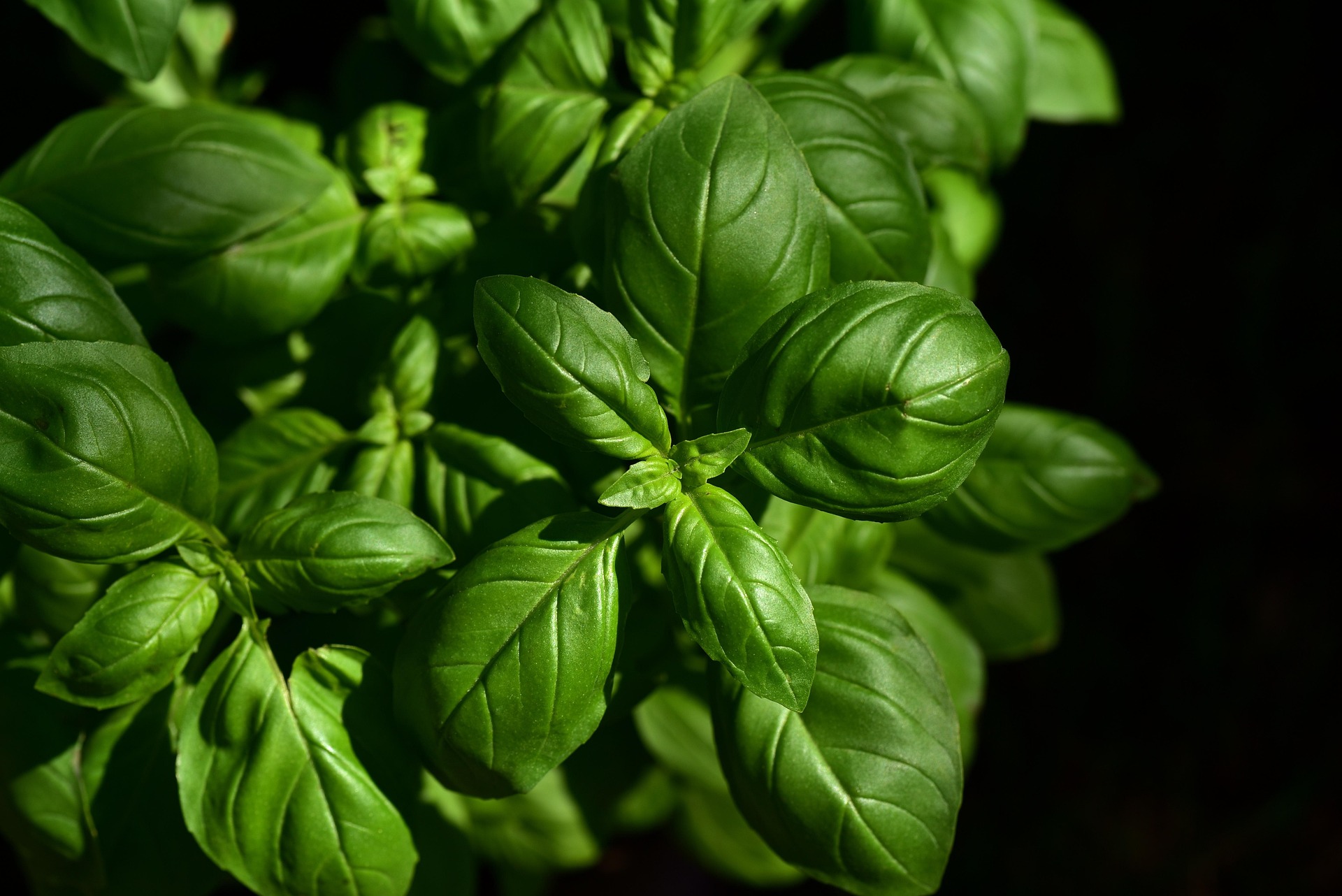
Cooking with flavorful herbs like basil can help you reduce salt use. Why are we mentioning this? Because the National Institute of Health reports that the average American consumes too much salt for optimal physical health. Here’s our quick growing guide to basil. A more comprehensive guide is on Gardening With Soule.
Basil Has Many Names
We called it the royal herb in the title, because that is indeed one of the common names. Botanists call the most common species Ocimum basilicum but there are many other species found growing around the world in warmer areas – or at least warmer months in cold areas. Whatever you call it, it is a wonderfully tasty herb to grow and use lavishly in summer cooking.
 Word Nerd Shares
The name basil comes from the Greek basilikón phutón, meaning “royal plant.” It made it’s way into Latin as basilius, and Spanish as basílico, hierba real, albahaca, or alhábega. In French, basil is sometimes called l’herbe royale (the royal herb).

Basil Harvesting and Use
Overall – basil is commonly used fresh in cooked recipes. It is generally added at the last moment, as cooking quickly destroys the flavor. The fresh herb can be kept for a short time in plastic bags in the refrigerator.
Saving Basil
Freezing chopped leaves or prepared pesto is an option; both are best used within a few months. Pesto can also be processed as a canned condiment and in my experience is still flavorful a year later. Dried basil loses much of its flavor, but is still useful as a herb in cooking.
One of my favorite ways to use basil is to make pesto. Or munch it on a stick with other tasty bites – like shown in the “Featured Photo” at the start of the post.

Basil Pesto
Ingredients
-
4 oz. fresh basil leaves (a generous double handful)
-
1/4 cup pine nuts or walnuts
-
2 cloves garlic, peeled
-
8 tablespoons olive oil
-
1/4 cup grated Romano cheese
-
1/4 cup grated Parmesan cheese
Toast nuts in an ungreased skillet over medium heat until golden. Cool.
While cooling, rinse your fresh harvested basil and pat dry.
Place cooled pine nuts, basil, garlic, and olive oil in a food processor or blender and puree until creamy.
Place in a bowl to stir in the cheeses.
Serve over pasta, rice, quinnoa or toasted tofu.
Further On, Over Time
Later, as the years went by on this site, we posted some other pestos, one vegan, one that doesn’t have the aged cheese that some people have issues with. Pesto Two Ways.
Thanks for Reading!
Legal
© Article copyright Savor the Southwest // Jacqueline A. Soule// Monica King. All rights reserved. You must ask permission to republish an entire blog post or article. Okay to use a short excerpt but you must give proper credit. You must include a link back to the original post on our site. No stealing photos.
Disclaimer
The authors of this website have researched the edibility of the materials we discuss, however, humans vary in their ability to tolerate different foods, drinks, and herbs. Individuals consuming flowers, plants, animals, or derivatives mentioned in this blog do so entirely at their own risk. The authors on this site cannot be held responsible for any adverse reaction. In case of doubt please consult your medical practitioner.

Be the first to reply