

First, note that Dia de Muertos is not some sort of Mexican Halloween. In fact, Day of the Dead is about as opposite to Halloween as you can get. It’s not about creepy spooky scary things – it is a celebration of life! Dia de Muertos is a time to remember the people that have formed the fabric of your life. It is time to retell the tales of joy and sorrow, fun and frustration, that those people brought with them.

Origins of Day of the Dead
I shared this on Gardening With Soule
“Day of the Dead origins are hotly debated. But what can not be argued is the fact that there was once a harvest festival across what is now Mexico – at the time of the full moon during the harvest season. The festival was held around the time of the Autumnal Equinox, when there was a full moon to help harvest the corn, beans, and squash that had proliferated over the summer. It is suggested that the event would have been celebrated at the same time as the Jewish harvest holiday of Sukkot, also a harvest festival. This makes sense as the latitudes and growing seasons are very similar.”
The latitudes are similar but the crops harvested and the foods eaten were very different!
Seven Traditional Foods
For Dia de Muertos, families will build an ofrendas or “altars” inside the home. These ofrendas include pictures of their departed ones, and also food and drink for the departed. Often the altar is decorated with cempoalzuchil flowers, as well as stacks of corn and other fruits of the harvest. Entire families then visit the cemetery, clean up family graves and decorate them with cempoalzuchil flowers.

There were seven primary foods of the Nahuatl speaking people. Often these are called “Aztec Foods” but the Aztec were from central Mexico and there were many other tribes in the rest of the country. This means that there are many regional food variations. That said, these seven foods are often found on the ofrendas across Mexico – irregardless of the original tribes of the area. These same foods were used even in the Southwest by many indigenous people including Yoeme (Yaqui).

Seven Traditional Foods of the Nahuatl
corn = tlaolli
beans = etl
squash = tzilacayohtli
amaranth = huauhtli
nopal = nopalli
chili = chilli
chia = chian
 Word Nerd Notes
Nopal, chili, chia. More Nahuatl words that we use today! Just like epazote – the words came into English from the Spanish that simply used the original native names for the plant!
Science Nerd Notes 
Why are “seven traditional foods” found around the world and across cultures? It is such a common theme!
For example on Sukkot, the Jews have a tradition of eating “Seven Types” of foods to show gratitude for the abundance of the harvest. In Hindu, the concept of “Seven Kinds of Food” symbolizes both – the outcomes of karma, and the self’s attachment to material possessions. This is also used to emphasize the intertwining of physical actions and spiritual consequences.
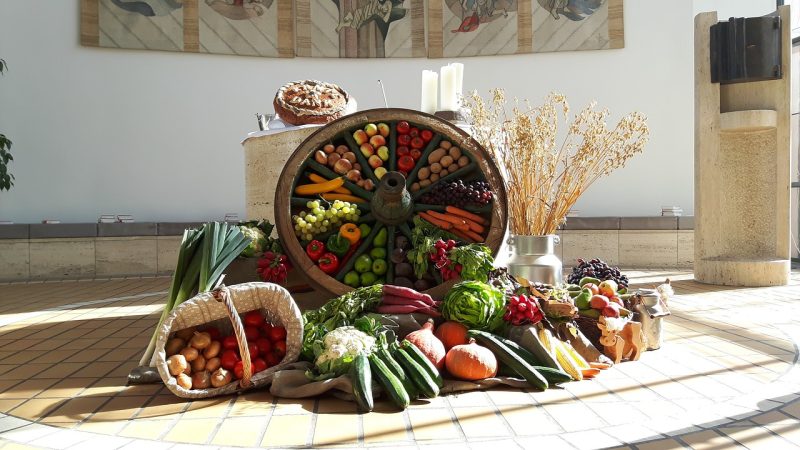
From an old cultural anthropology textbook (in summation) … cultures that follow a lunar calendar often have seven as a spiritual number. Why? because the moon cycles through phases every 28 days. This divides very nicely into 4 weeks of 7 days each. Why not 2 weeks of 14 days? It is theorized that it’s because we don’t have 14 fingers.
Celebrate Dia de Muertos
Here are a sample of our food posts about these seven traditional foods. Just in case you wish to create a traditional ofrenda in your own space to celebrate your departed ones. You can also use our search bar and look up more mentions. (YouTube links are red because that is “their” color.)
Corn 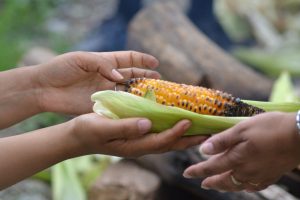
several ways of cooking corn
corn or mesquite drink called atole
corn chowder (due November 2025)
jelly even – corn cob jelly (due November 2025)
Beans
a hearty meal of Sonoran bean soup
forage beans on YouTube
some people need to – beware of beans
predigest beans with the herb epazote
predigest beans with epazote on YouTube
Squash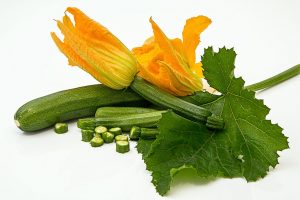
using opo – a traditional Mexican squash on YouTube
cooking squash blossoms
cooking squash blossoms on YouTube
Chia
use some honey to make this chia pudding
Nopales
drat it – there was a nice one on the destroyed site. We shall have to repost.
Chili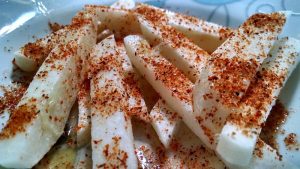
refreshing ans tasty roots and fruits salad
tips on drying the chili harvest
easy to make Spanish rice with chili on YouTube
Amaranth
traditional treat – alegria for Dia de Muertos
tips on using amaranth
Gardening With Soule shares how to grow amaranth
Here’s The Cookbook!
 May we suggest our dandy little cookbook? Using Honey in New and Savory Ways offers 36 pages of tips for using honey in your cooking, as well as in all manner of dishes. A steal at only $6!
We hope you will help support some local Southwest folks!
From the review:
“Honey is for more than desserts and this book can help! Using honey in cooking savory dishes helps engage all your taste buds and adds a layer of added flavor to everyday dishes – plus holiday fare.”
Beekeeper? We offer volume discounts – because if you sell honey in local markets you might want to offer some of these books as well. Just click on the special orders tab.
Legal Note
© Article copyright Savor the Southwest // Jacqueline A. Soule. All rights reserved. You must ask permission to republish an entire blog post or article. Okay to use a short excerpt but you must give proper credit. You must include a link back to the original post on our site. No stealing photos.
Disclaimer
The authors of this website have researched the edibility of the materials we discuss, however, humans vary in their ability to tolerate different foods, drinks, and herbs. Individuals consuming flowers, plants, animals or derivatives mentioned in this blog do so entirely at their own risk. The authors on this site cannot be held responsible for any adverse reaction. In case of doubt please consult your medical practitioner.

Be the first to reply