
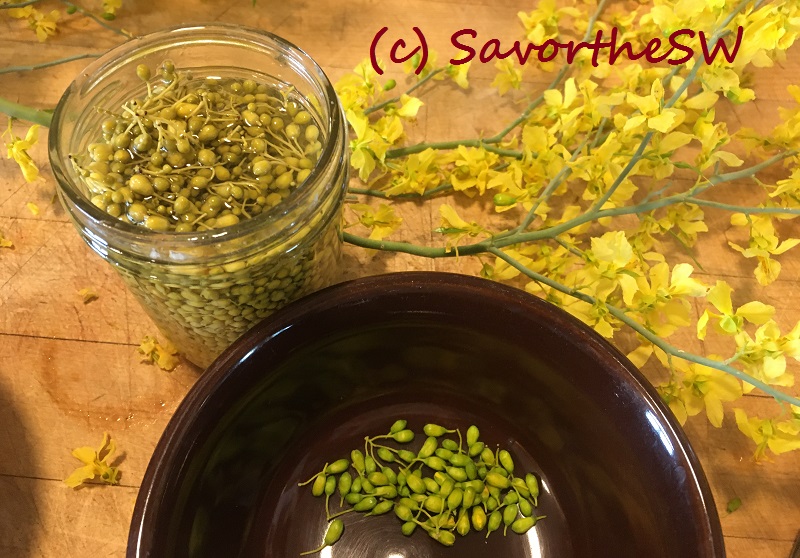
So many Southwestern flower buds can be harvested and turned into “capers.” If you don’t live in the Southwest there are still many flower buds to use. Flowers that have been historically used by people around this globe before there were supermarkets.
Capers Defined
Capers are simply pickled flower buds. Technically, “capers” are the pickled buds of the caper bush (Capparis spinosa), a bush native to the Mediterranean. So these that don’t use buds of the caper bush are “pickled flower buds.” BUT. Over the years, I have been amazed, astounded, and even somewhat saddened by how many people make a face, or even refuse to eat the dish when you say “pickled flower buds.” Call it “homemade capers” or “desert capers” and they dive right in with their forks. How do people become so resistant to unusual foods?!
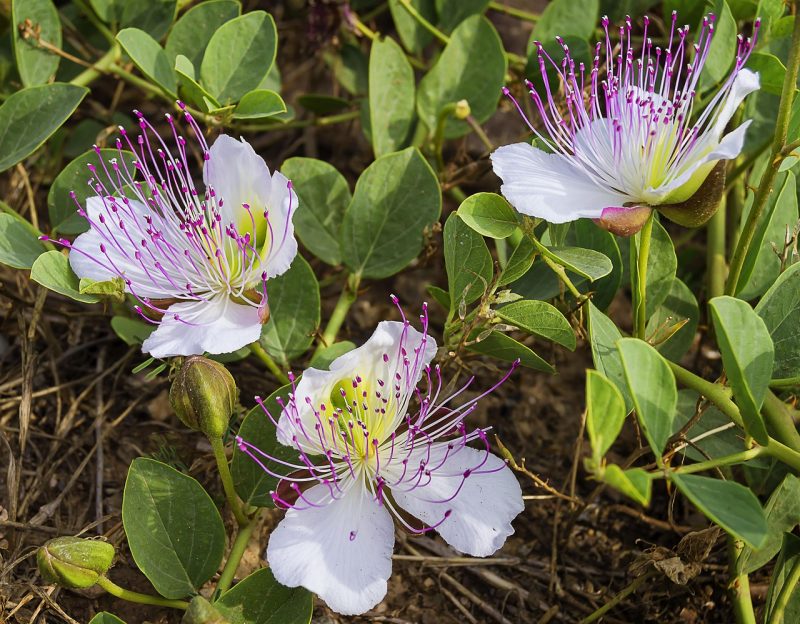
To make this post searchable by interweb search engines, we will call them “capers” no matter what species they come from.
Word Nerd Wonders
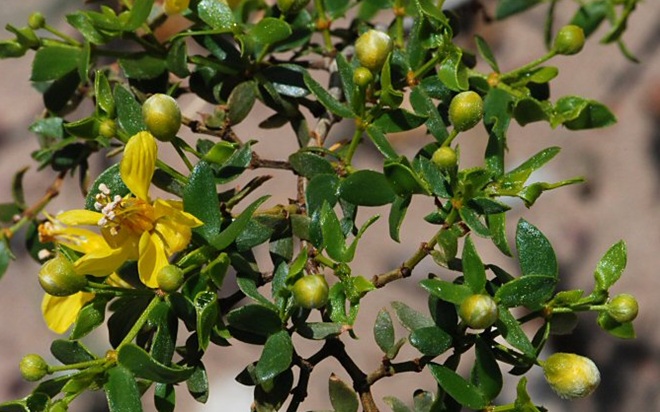
 If “capers” are the pickled buds of the caper bush, when we pickle buds of creosote bush (like in this video) would they then be “creosotes?”
Plants for Foraged Capers
You can grow the caper bush in our region, as shared on Gardening with Soule. Sadly though, it may freeze in the higher elevations. Not to worry, there are so very many Southwestern plants that are found in our yards and across the entire region that you can use the flower buds from.
So far I have made these capers with:
     palo verde (Parkinsonia species),
     ironwood (Olneya tesota),
     yucca (Yucca species),
     agave (Agave species), and
     creosote (Larrea tridentata).
Research Matters
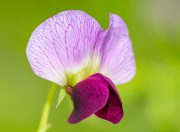
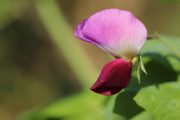
If you know plants you will notice that there are two species of flower buds in the Bean Family (Leguminosae) on my list. There are also a vast number of plants in the Bean Family that will never be listed. Be very careful with the bean family! Do not make these with any old bean or pea flower you come across. A number of them contain toxins.
Example, the Legume family includes peas. The garden pea (Pisum sativum) has edible flowers BUT but the sweet pea (Lathyrus odoratus) flowers that look identical are toxic to humans.
We will go more into edible flower species for capers next week. There are well over 100 species to use, but let’s start today with palo verde buds.
How to Make Capers
There are two ways to pickle your flower buds – brining or fermentation.
Brining is using a vinegar and salt brine (olive brining in our YouTube series uses salt alone). Fermentation is a process called “lacto-fermenation,” also called “open fermentation.”
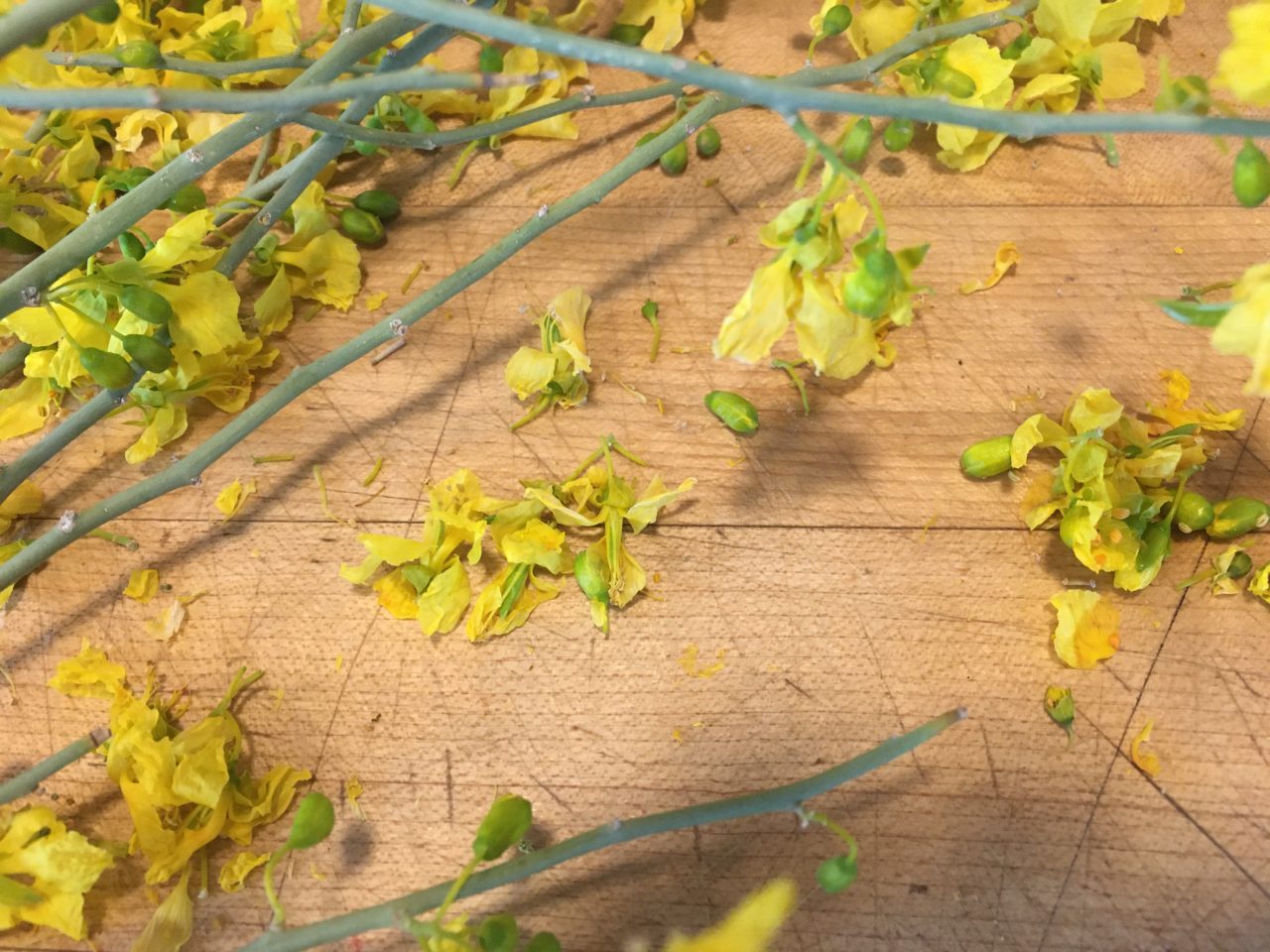
Foraged Capers in Brine
Step 1 Make the vinegar brine.
To make the brine, combine equal parts white wine or apple cider vinegar and water, and also some salt.
To one cup of total liquid, add 1 tablespoon of non-iodized or pickling salt.
This does sound like a lot of salt, but it is enough to do the job of helping preserve the buds.
If you decide later that it is too salty, you can soak the buds in water before using them to reduce the saltiness.
Step 2.
Fill the jar only 3 /4 of the way with your flower buds – they will expand!
Pour your brine over the buds.
Put the cap on and gently (!) bang the jar on the counter a few times. This will help drive air bubbles up to the surface. You may then need to add more brine liquid.
Step 3.
Store the jar in the refrigerator.
Try to remember to shake well once or twice a day for the first week.
The buds will be ready to use in about a fortnight (2 weeks to those not reading British mystery stories). They will taste even better if you can bring yourself to wait a full month before sampling.
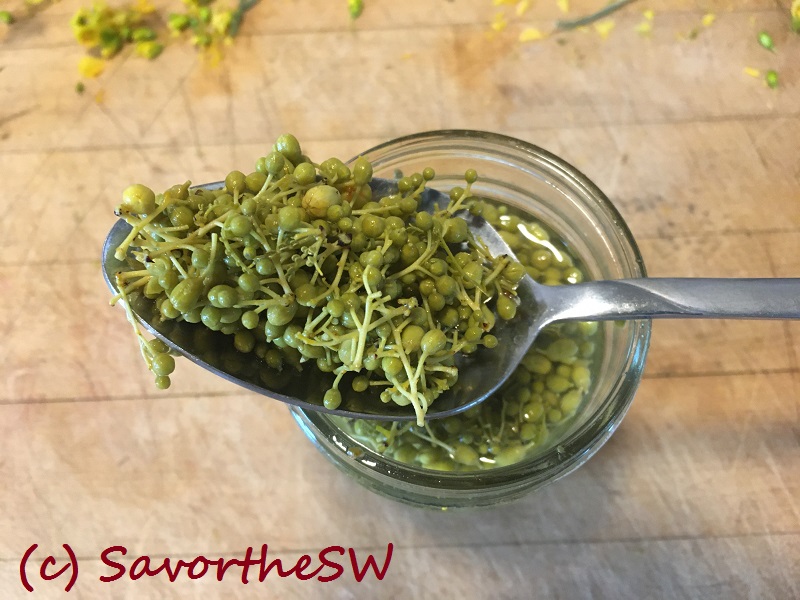
Jacqueline’s Fast & Easy Brine
In a clean 1 cup canning jar, or old salsa jar – or what have you.
Place your tablespoon of non-iodized salt.
Fill the jar 3 /4 of the way with flower buds.
Put in 1 /2 cup vinegar.
Top with filtered water. (Tap water in our region often has excessive calcium which will affect the taste.)
Canning Brined Capers
For long term storage of these pickled flower buds outside the refrigerator, you can water-bath can your pickled buds. Leave 1 /2 inch head space and process half-pint jars in a boiling water bath for 10 minutes at sea level. Adjust the canning time for altitude.
Canned palo verde buds did tend to get mushy. This year I am going to experiment with adding some canning “pickle crisp” to the jars. Will keep you posted.
Savor the Southwest YouTube video on palo verde capers.
Fermentation Method for Capers
Step 1. Create Fermentation Brine
Dissolve 1 Tablespoon kosher or other non-iodized salt in a pint of filtered or non-chlorinated water. (Most municipal tap water is chlorinated to destroy bacteria, but for lacto-fermentation you are counting on beneficial probiotic bacteria to ferment the food.)
This is not some new hippy-dippy thing. Humans have done lacto-fermentation for at least 6000 years. Our ancestors would combine some water, some salt, and some flower buds (or other plant parts, like cabbages to make sauerkraut), and then leave them loosely covered in open air. Result – they will start to ferment. Eventually, the lactic acid created by the fermentation will lower the PH, and make your fermentation shelf stable, all on it’s own. The vinegar used in the first listed brining process simply lowers the pH faster. More on flower fermentation.
Step 2.
Put the desert capers in a clean glass jar and cover them with the brine. Loosely cover the jar and leave it out on the counter at room temperature. Place a small plate under it to catch the overflow that may occur as the buds ferment.
Step 3.
Leave the jar of buds in salt water out at room temperature for 3 days. By this time they should start to have the lightly sour but clean smell typical of a young fermentation – think sauerkraut. Transfer the jar of buds to the refrigerator, and wait at least 2 weeks before sampling. This is so the flavor becomes fully developed.
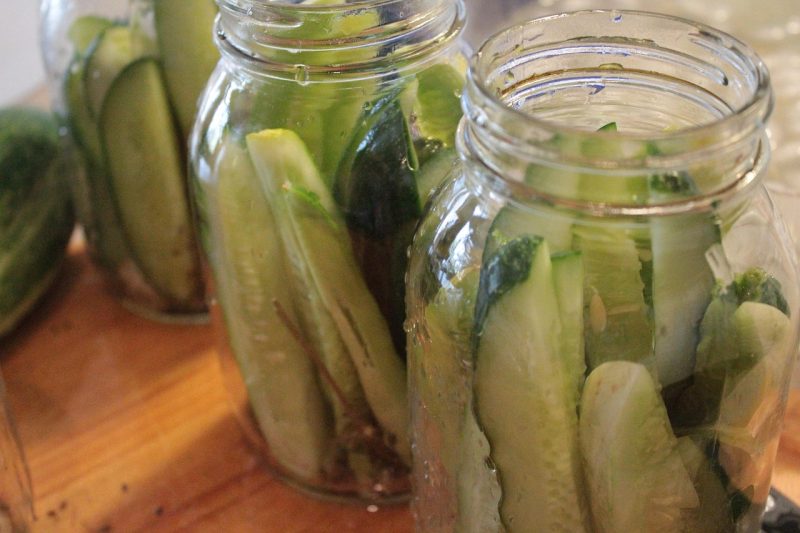
Canning Lacto-Fermented Capers
Avoid canning lacto-fermented products. The whole point of canning is to destroy bacteria, all bacteria. “Good” and “bad” bacteria are destroyed by canning. The whole point of lacto-fermentation is to foster and grow bacteria that are beeficial for your digestive system.
Enjoy!
Just a Few Copies Left
 The last few copies of this out-of-print award winning Southwestern book are now for sale. Father Kino’s Herbs: Growing and Using Them Today The review says:
“Award-winning garden writer Dr. Jacqueline A. Soule has pulled together a fascinating book on the life of Father Eusebio Francisco Kino and some of the plants that he brought to Southern Arizona and northwestern Sonora, and area called the Pimeria Alta.”
This link is to our sales site. The profits from the sale go to the local Horticulture Therapy non-profit Tierra del Sol Institute. We hope you will help support this great Southwest non-profit!
Legal Notes
© Article copyright Savor the Southwest // Jacqueline A. Soule. All rights reserved. You must ask permission to republish an entire blog post or article. Okay to use a short excerpt but you must give proper credit. You must include a link back to the original post on our site. No stealing photos.
Disclaimer
The authors of this website have researched the uses and edibility of the materials we discuss, however, humans vary in their ability to tolerate different foods, drinks, and herbs. Individuals consuming flowers, plants, animals or derivatives mentioned in this blog do so entirely at their own risk. The authors on this site cannot be held responsible for any adverse reaction. In case of doubt please consult your medical practitioner.

Be the first to reply